If you searched for PokeMee expecting to find a current restaurant, there is an important piece of context to know first. PokeMee was a Hawaiian inspired poke restaurant in Goleta, California, that opened in 2016. It became known for customizable bowls built around fish, rice, sauces, toppings and other ingredients before eventually operating under a different name.
The story is slightly more complicated than an ordinary restaurant opening and closing. PokeMee positioned itself as a Hawaiian Japanese fusion concept, combining the idea of Hawaiian poke with ingredients and presentation influenced by Japanese cuisine. Contemporary coverage described its bowls as customizable and compared the concept with deconstructed sushi, giving customers substantial control over what went into their meal.
Today, the most important distinction is between historical information and current information. PokeMee was later renamed Choppa Poke, reportedly because of a naming dispute and the successor restaurant ultimately closed in June 2026. That means older pages describing PokeMee as an active business should be read as historical references rather than current restaurant information.
What Was PokeMee?
PokeMee opened at Hollister Village Plaza in Goleta in September 2016. Contemporary reporting placed the restaurant at 7000 Hollister Avenue, Suite 102 and described it as a new fast casual destination centered on build-your-own poke bowls. The concept arrived during a period when poke was becoming increasingly visible in California dining.
The restaurant was associated with owners David Chen and Chris Nguyen, who described the concept as a Hawaiian Japanese fusion. Rather than presenting poke as a narrowly traditional dish, the restaurant emphasized customization and Japanese-influenced ingredients. One contemporary account characterized the resulting experience as similar to deconstructed sushi served in a bowl.
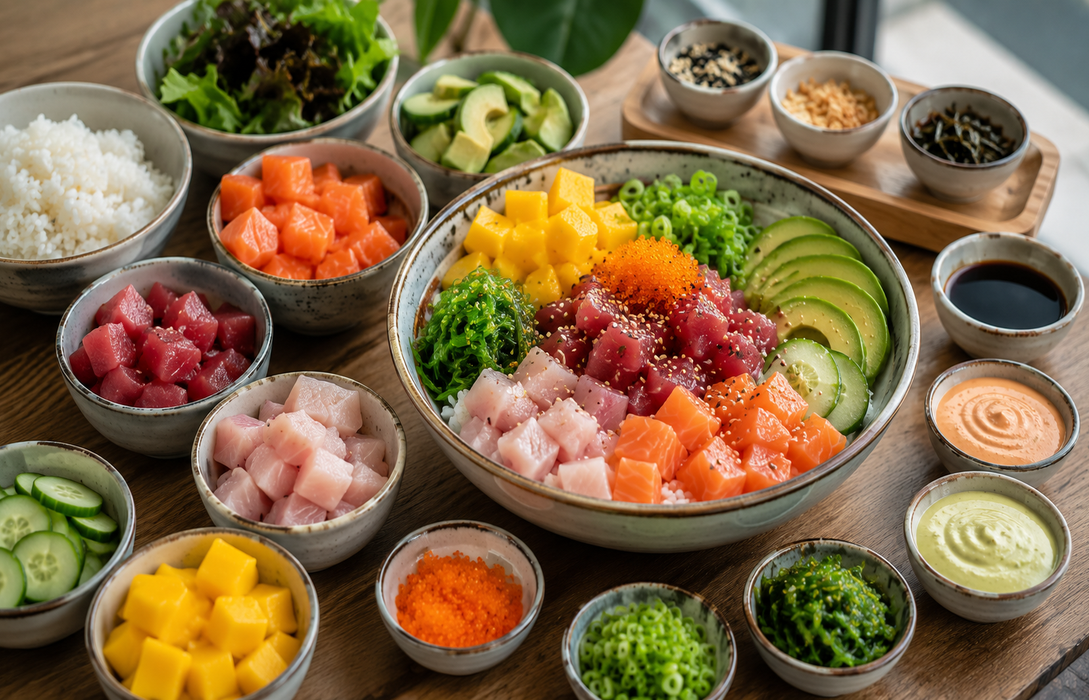
That positioning helps explain the restaurant’s appeal. A customer could start with rice or greens, choose a protein, then adjust sauces, sides and toppings according to personal taste. The result was less like ordering one predetermined entrée and more like assembling a meal from a collection of complementary components.
PokeMee’s Goleta location
The restaurant operated at Hollister Village Plaza in Goleta, a community within Santa Barbara County. Its location was significant because contemporary local reporting described the area as having comparatively limited access to specialized Asian food when the restaurant opened. PokeMee therefore presented itself as a fresh alternative to more conventional lunch options.
Local coverage also gives a useful snapshot of how the restaurant initially positioned itself. The concept was fast-casual rather than formal, with customers moving through a selection of bases, proteins, sauces and toppings. That format made the restaurant relatively approachable for diners who already understood poke as well as newcomers encountering the dish.
The Hawaiian-Japanese concept
PokeMee’s food identity was deliberately hybrid. Its core idea came from Hawaiian poke, while the restaurant incorporated Japanese ingredients, sushi-style rice, sauces and presentation. The manager described the food as influenced by ahi poke from Hawaii and fish associated with Japan, creating a fusion concept rather than claiming to reproduce a single traditional culinary format.
That distinction matters when describing the restaurant accurately. Calling PokeMee simply a sushi restaurant would miss its central concept, while calling it a purely traditional Hawaiian establishment would also oversimplify what the restaurant was doing. Its identity was built around a contemporary, customizable interpretation of poke designed for a fast casual setting.
What Did PokeMee Serve?
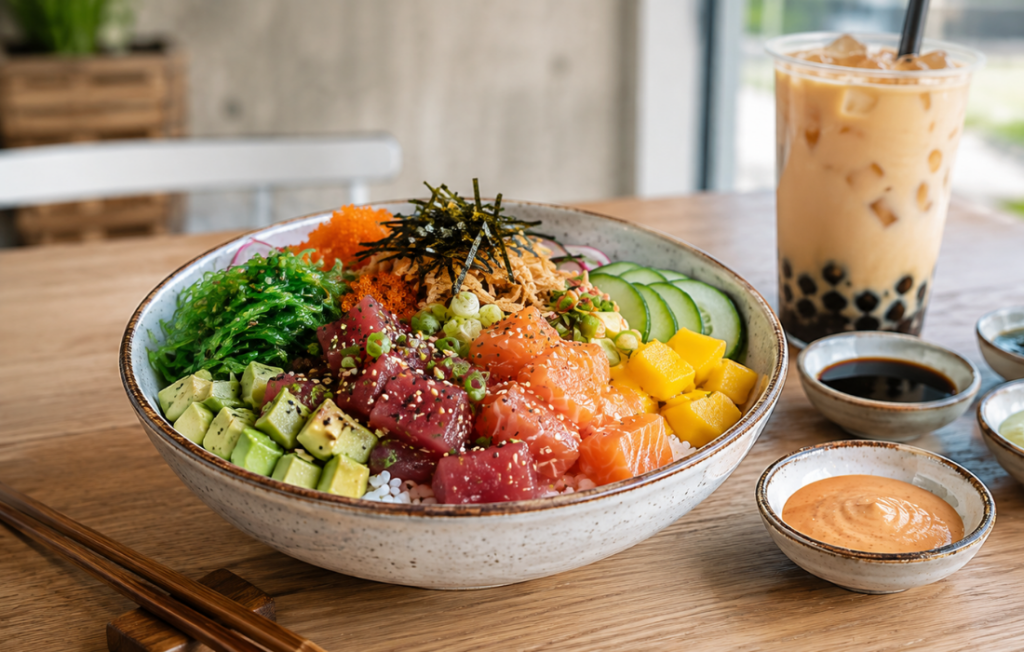
The centerpiece was the customizable poke bowl. Contemporary descriptions say customers could choose among bases such as white rice, brown rice, sushi rice, salad or chips, with combinations possible depending on the order. Protein choices included fish and other options, giving customers several ways to construct a bowl around their preferred ingredients.
Reported protein options included salmon, tuna, yellowtail, albacore, shrimp, octopus, edamame and spicy tuna. The exact menu should be understood historically because menus change over time, but these selections demonstrate the restaurant’s broader philosophy: offer enough variety for customers to build bowls around different tastes, textures and dietary preferences.
The toppings and sides expanded that customization further. Contemporary reporting mentions ingredients including avocado, cucumber, crab meat, kiwi, mango, white onion, seaweed salad, masago, green onion, fried onion, shredded seaweed and jalapeños. The combination of savory, fresh, creamy, acidic and spicy components gave customers considerable room to create different flavor profiles.
Sauces were another important part of the concept. Coverage from the restaurant’s opening period mentions house ponzu, spicy mayo, muso sauce and wasabi mayo, while another local review highlighted the restaurant’s attention to sauce development. The restaurant’s management specifically emphasized sauce as an element capable of tying the various ingredients together.
Poke bowls and protein choices
The protein was effectively the anchor of a PokeMee bowl. Seafood focused choices such as salmon, tuna, yellowtail, albacore and spicy tuna allowed customers to build bowls ranging from relatively straightforward fish and rice combinations to more elaborate creations involving multiple textures and sauces. The restaurant also offered non fish choices such as edamame.
One opening era report specifically noted that the restaurant promoted Scottish salmon rather than the Atlantic or Canadian salmon varieties mentioned in the article. It also described fresh tuna loins as an important part of the restaurant’s offering. Those details illustrate the emphasis PokeMee placed on its seafood identity, although they should not be treated as a description of today’s menu because the restaurant no longer operates under that name.
Rice, salad and other bases
The base gave customers another opportunity to determine the character of a bowl. White rice, brown rice, sushi rice, salad and chips were among the reported options, and contemporary coverage described combinations in which customers could use more than one base. This approach allowed the same protein selection to become substantially different meals depending on the foundation.
The sushi rice received particular attention in opening coverage. One report stated that the rice used a proprietary blend of Japanese vinegar, while another contemporary review described it as especially flavorful. Because the restaurant is now closed, these details are best understood as historical descriptions of its original food concept rather than guarantees about any present day product.
Boba tea and other additions
PokeMee was also connected to the Sno-Crave Tea House concept associated with its owners. Contemporary reporting says the restaurant offered boba milk teas and fruit teas alongside its poke bowls, extending the menu beyond seafood and rice. The combination gave the restaurant a broader casual dining identity than a narrowly focused poke counter.
This pairing also fits the restaurant’s overall emphasis on customization. A diner could build a savory bowl according to personal preferences and then choose a tea with a preferred flavor or sweetness level. A local review noted that drinks could be customized by sweetness, reinforcing the broader theme of giving customers control over their meal.
Why Did PokeMee Stand Out?
The most distinctive feature was not any single ingredient. It was the restaurant’s assembly line approach to a meal that could be repeatedly customized. Contemporary coverage described the combinations as almost endless, with customers selecting from proteins, grains, sauces, toppings and other ingredients instead of choosing from a small set of fixed entrées.
That model was well suited to poke because the dish naturally accommodates combinations. A bowl can be built around rich fish, bright citrus, creamy sauce, crisp vegetables, sweet fruit, salty seaweed or spicy toppings. PokeMee leaned into that flexibility, making personalization part of the restaurant’s identity rather than treating it as an optional accommodation.
A build your own approach
The build your own format also lowered the barrier to experimentation. Someone familiar with poke could combine several seafood options and stronger sauces, while a less adventurous customer could choose a familiar protein with rice and relatively straightforward toppings. The same restaurant could therefore serve different preferences without requiring separate dishes for every customer.
Local reporting suggests that this flexibility was intentional. The restaurant’s management presented the concept as an alternative to familiar fast casual foods such as burgers, pizza and sandwiches. Instead of competing by offering another conventional meal, PokeMee attempted to differentiate itself through freshness, seafood, customization and a distinctive fusion identity.
Its place in Goleta’s dining scene
PokeMee also reflected a broader change in the local food environment. When it opened, local business coverage described Hawaiian poke as relatively difficult to find in the immediate area and presented the restaurant as a response to that gap. The restaurant therefore had a local positioning story as well as a culinary one.
That context is useful because restaurant concepts rarely exist in isolation. PokeMee was not simply selling bowls; it was introducing a particular style of fast-casual dining to customers who might otherwise have chosen more familiar local options. Its combination of poke, Japanese influence, customization and tea beverages created a specific niche within the Goleta restaurant landscape.
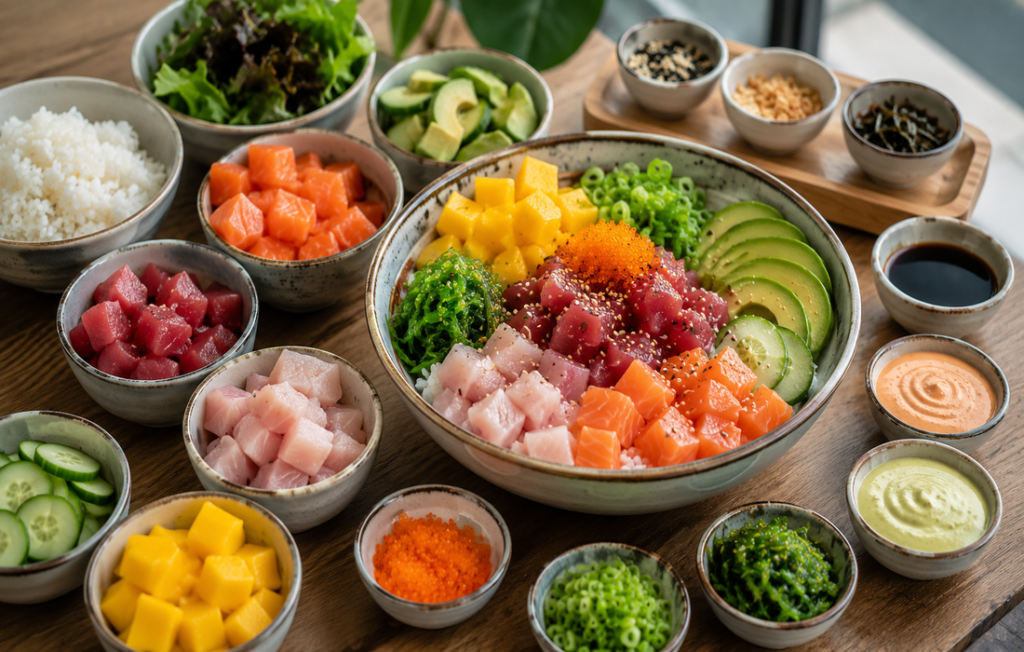
Understanding the original PokeMee menu starts with thinking about the bowl as a sequence of decisions rather than a fixed recipe. The base established the texture and overall weight of the meal, while the protein determined its central flavor. Sauces, sides and toppings then added contrast, richness, acidity, heat, sweetness or crunch.
Choosing a base
A rice base generally makes a poke bowl feel more substantial, while greens create a lighter foundation. Sushi rice also adds a distinctive Japanese-influenced character, particularly when paired with ingredients and sauces designed around that flavor profile. Because PokeMee offered several base choices, customers could change the character of a bowl without changing its primary protein.
Selecting a protein
The protein was where diners could decide how seafood-forward they wanted the meal to be. Salmon, tuna, yellowtail, albacore and spicy tuna appeared among the reported choices, while other options broadened the menu. Combining proteins could create more variety, although the precise combinations and portion rules belonged to the restaurant’s historical menu.
Balancing sauces and toppings
A good customizable bowl depends on balance. Rich fish and creamy sauces can benefit from acidic or fresh ingredients, while spicy components can be softened by avocado or other richer toppings. PokeMee’s reported selection of ponzu, spicy mayo, wasabi mayo, fruit, vegetables, seaweed and other toppings gave customers enough contrast to build very different bowls.
Building a satisfying bowl
The original concept rewarded customers who thought about how ingredients interacted rather than simply adding everything available. A bowl containing several rich ingredients can become heavy, while one dominated by delicate components may lack contrast. The appeal of customization lies precisely in finding a combination where the base, protein, sauce and toppings support one another.
What Happened to PokeMee?
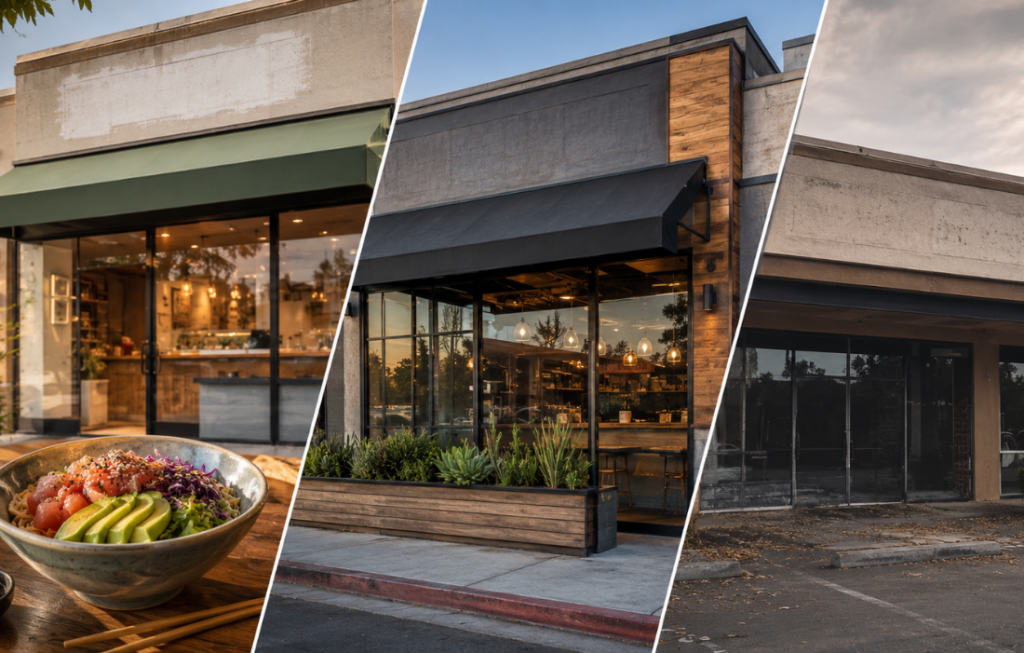
The PokeMee name did not remain unchanged. In 2018, local reporting stated that owner David Chen planned to change the restaurant’s name to Choppa Poke because of a name dispute involving another poke restaurant in Los Angeles. This is why later references to the Goleta business may appear under a different name.
The change is important for anyone researching the restaurant today. Searching only for PokeMee can surface older articles, reviews, menus, and business references created when that was the operating name. Searching for Choppa Poke provides the later chapter of the same restaurant’s history and helps connect the historical PokeMee references with the business that followed.
The transition to Choppa Poke
The connection between the names is supported by later local reporting. In June 2026, The Restaurant Guy described Choppa Poke as the renamed successor to PokeMee, noting that David Chen had originally opened PokeMee at 7000 Hollister Avenue in September 2016. The article explicitly connects the former and later names.
That means an apparent conflict between older PokeMee listings and newer Choppa Poke references is not necessarily evidence of two unrelated businesses. In this case, the available local reporting shows a direct progression from PokeMee to Choppa Poke, followed eventually by the closure of the successor restaurant.
The restaurant’s eventual closure
The latest source for this research reports that Choppa Poke’s final day was Sunday, June 21, 2026. The same report says Urbane Cafe was expected to replace the restaurant at the location, making the current status substantially different from what older PokeMee pages might suggest.
For anyone planning a visit, this is the most important fact in the entire article. PokeMee should be treated as a historical restaurant name, not as a currently operating Goleta restaurant. The successor business has also closed, according to the June 2026 local report, so an old menu or restaurant directory should not be interpreted as current availability.
Is PokeMee Still Open?
No. Based on the most recent local reporting located for this research, the restaurant originally known as PokeMee later operated as Choppa Poke and closed on June 21, 2026. The closure means that historical references to PokeMee’s Hollister Avenue location should not be used as evidence that the restaurant remains open.
The distinction is particularly important because several older articles remain available online. A 2016 opening article, for example, lists the original address, menu, telephone number and website, while contemporary reviews describe the restaurant as an active business. Those sources are useful for understanding what PokeMee was, but they predate the subsequent name change and closure.
What happened to the Hollister Avenue location?
The original PokeMee operated at 7000 Hollister Avenue, Suite 102, in Goleta. Later reporting identifies the same restaurant as Choppa Poke and states that it closed in June 2026. The location was then expected to receive a new restaurant concept, meaning the physical address should not be confused with an active PokeMee listing.
The broader lesson for restaurant searches is straightforward: historical search results can remain highly visible long after a business changes names or closes. For PokeMee specifically, the opening coverage is valuable for menu and concept research, while the later closure report is the more relevant source for present day status.
Conclusion
PokeMee was a distinctive Goleta restaurant built around customizable poke bowls and a Hawaiian Japanese fusion concept. Its original menu combined seafood, rice or salad bases, sauces, vegetables, fruit, seaweed and other toppings, while boba tea expanded the experience beyond poke itself. Contemporary coverage shows that customization was central to its identity.
Its story, however, is now historical. The restaurant opened in 2016, later changed its name to Choppa Poke amid a naming dispute and ultimately closed in June 2026. For anyone researching PokeMee today, the most accurate approach is to preserve that timeline rather than presenting old restaurant information as current.
The result is a useful distinction between what PokeMee was and where the business stands now. Its customizable poke concept remains the key to understanding why the restaurant attracted attention in Goleta, while the later name change and closure explain why searches for PokeMee can produce seemingly contradictory information across older and newer sources.
FAQs
What was PokeMee?
PokeMee was a fast casual Hawaiian Japanese fusion restaurant specializing in customizable poke bowls.
Where was PokeMee located?
It was located at 7000 Hollister Avenue, Suite 102, in Hollister Village Plaza, Goleta, California.
What food did PokeMee serve?
PokeMee served customizable poke bowls with rice or salad, seafood, proteins, sauces, vegetables and toppings.
Was PokeMee a Hawaiian restaurant?
Yes, but it described its concept as Hawaiian-Japanese fusion, combining traditional poke with Japanese-inspired flavors.
What proteins did PokeMee offer?
Reported options included salmon, tuna, yellowtail, albacore, shrimp, octopus, edamame and spicy tuna.
Could customers customize their bowls?
Yes. Guests could choose their base, protein, sauces, sides and toppings to create their own bowl.
Did PokeMee serve boba tea?
Yes. PokeMee also offered boba milk teas and fruit teas with customizable sweetness levels.
What replaced PokeMee?
Urbane Cafe was expected to replace Choppa Poke at the location, although future plans may change.