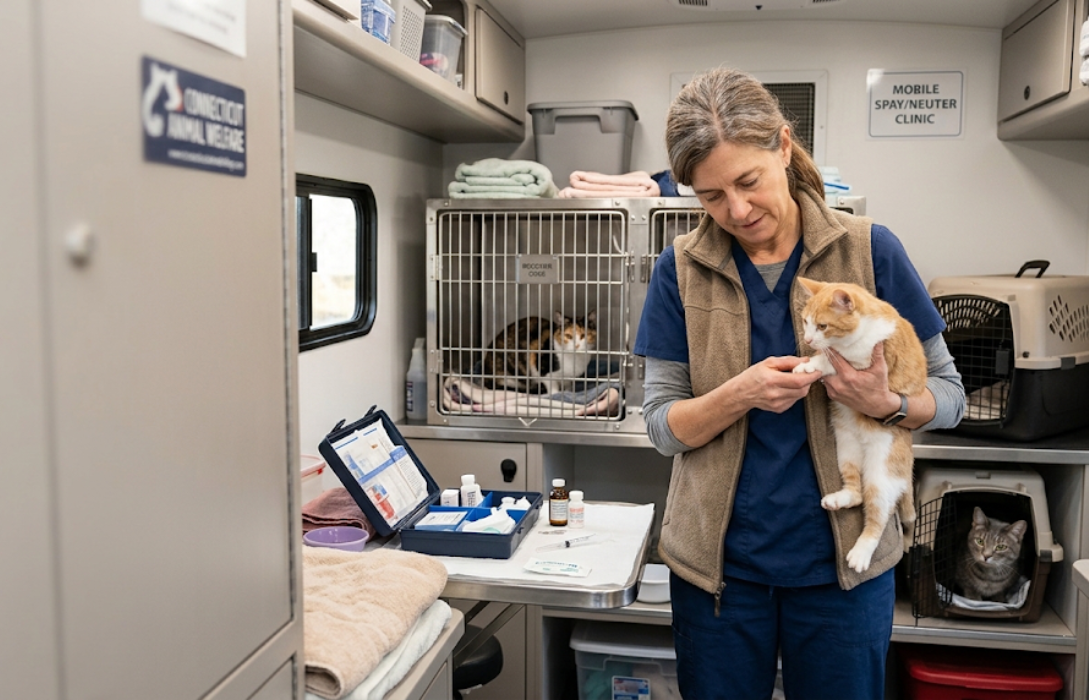
Searching for Donna Sicuranza can initially produce a confusing mixture of biography pages, organizational references and repeated claims about her work in Connecticut animal welfare. The clearest public record, however, is considerably more straightforward: Sicuranza is a nonprofit executive closely associated with Tait’s Every Animal Matters or TEAM and its long running mobile feline spay/neuter program.
What makes her professional story interesting is not celebrity or public notoriety. It is continuity. For decades, Sicuranza has been connected with an organization built around a practical problem: making preventive veterinary services more accessible to people caring for cats, including feral and community cats. The organization’s own records provide the strongest foundation for understanding that career.
Who Is Donna Sicuranza?
Donna Sicuranza is publicly associated with Tait’s Every Animal Matters, a Connecticut animal welfare nonprofit based in Westbrook. TEAM’s 2019 publication identified her as its Executive Director, while the organization’s current public materials have used the name Donna Sicuranza Marconi. The important point is the continuity of the professional role rather than treating the names as separate people.
Her public work centers on nonprofit administration, communications and feline welfare rather than veterinary medicine. That distinction matters because TEAM has separate administrative and veterinary responsibilities. In its 2019 publication, Sicuranza appears as Executive Director while Arthur Heller, DVM, is identified as Medical Director, illustrating the different functions required to operate the mobile clinic.
The uploaded research reaches the same conclusion: the public record is strongest when it connects Sicuranza to TEAM, the mobile clinic and accessible feline care, rather than attempting to build a personal life biography from uncertain secondary material.
How Donna Sicuranza Became Connected With TEAM
Sicuranza’s earlier professional background is associated with writing, editing and public relations. Her LinkedIn profile currently identifies Tait’s Every Animal Matters and Trinity College Hartford, although the profile itself does not provide enough information to establish a complete educational biography. That makes the communications side of her career more useful than unsupported claims about degrees or credentials.
That background becomes particularly relevant when considering what running a small nonprofit actually requires. A mobile veterinary organization needs more than medical personnel. It also needs appointment communication, public education, donor relationships, community coordination, operational planning and a clear explanation of why preventive services deserve support.
TEAM’s own newsletter provides direct evidence of Sicuranza’s communications role. The 2019 issue identifies her as its editor and includes a message written by her to readers. That combination of executive and editorial responsibilities helps explain why communication appears repeatedly in the public record surrounding her work.
How the TEAM Mobile Feline Clinic Began
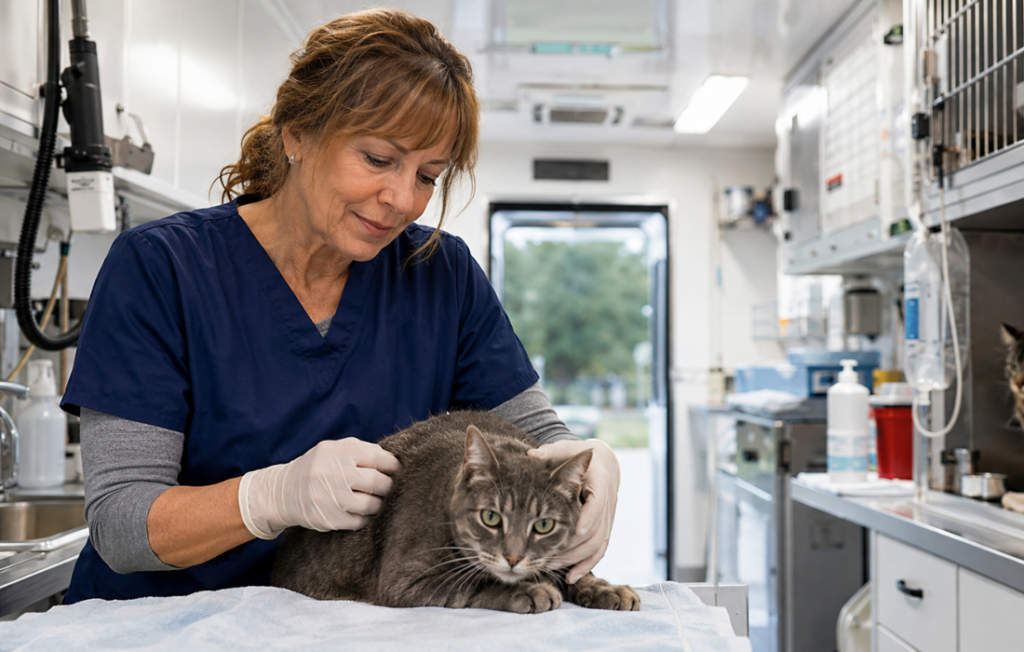
The history of Donna Sicuranza is difficult to separate from the history of TEAM’s mobile feline clinic. According to TEAM’s 2019 newsletter, the clinic was established in 1997 by the late veterinarian John Caltabiano and Sicuranza to make spay/neuter services more affordable and accessible to cat caretakers.
The same publication says the first day involved 12 cats aboard a 22 foot mobile clinic. By 2019, TEAM reported that its veterinary staff could spay or neuter 35 cats in one of two custom-built vehicles. Those figures illustrate the operational change from a small initial experiment to a mature mobile service, although they should not be confused with an individual achievement attributable to Sicuranza alone.
The clinic reached its 200,000th sterilization surgery in 2019. TEAM described the milestone as evidence of a program that had continued operating for more than two decades, while emphasizing the combined contributions of veterinary staff, office personnel, maintenance workers, donors and cat caretakers.
The organization’s current public figure, as reflected in the supplied research, is more than 225,000 cats sterilized and vaccinated since 1997. That is an organizational cumulative figure, not a measurement of cats personally treated by Sicuranza. The distinction is important when describing nonprofit impact accurately.
What Donna Sicuranza Does at TEAM
The exact contents of Sicuranza’s current daily workload are not publicly documented in enough detail to describe every responsibility with confidence. Her title establishes executive leadership, while TEAM publications provide evidence of communication, editorial and public facing responsibilities. Beyond those documented areas, it is safer to describe the likely scope of nonprofit leadership without presenting assumptions as facts.
Her role is therefore best understood as organizational rather than clinical. The medical work belongs to veterinarians and veterinary technicians, while the executive function involves helping the organization operate as a sustainable service. TEAM’s 2019 staff listing makes that division especially clear by separating its veterinary and administrative staff.
That distinction also prevents a common biography mistake: treating the cumulative number of surgeries performed by TEAM as though it represents one executive’s individual output. A more accurate interpretation is that Sicuranza’s contribution is leadership within a system involving medical professionals, administrative workers, donors, caretakers and the communities hosting the mobile clinic.
Why Her Communications Background Matters
Communications can sound like a secondary skill in animal welfare until the operational realities become visible. A nonprofit offering veterinary services must explain eligibility, coordinate appointments, communicate procedures, maintain relationships with supporters and translate a technical mission into language that ordinary cat caretakers can understand.
Sicuranza’s editorial work offers direct evidence of that function. In TEAM’s 2019 newsletter, she is identified as editor and writes about the organization’s milestone and mission. The publication also includes practical service information, donor material and stories intended to keep supporters connected to the organization.
This is one of the more useful ways to understand her career. Rather than relying on broad descriptions such as “inspiring leader,” the record shows a person working at the intersection of nonprofit administration, public communication and animal welfare. That is a narrower description, but it is also more defensible.
The Personal Experience Behind TEAM’s Feral Cat Work
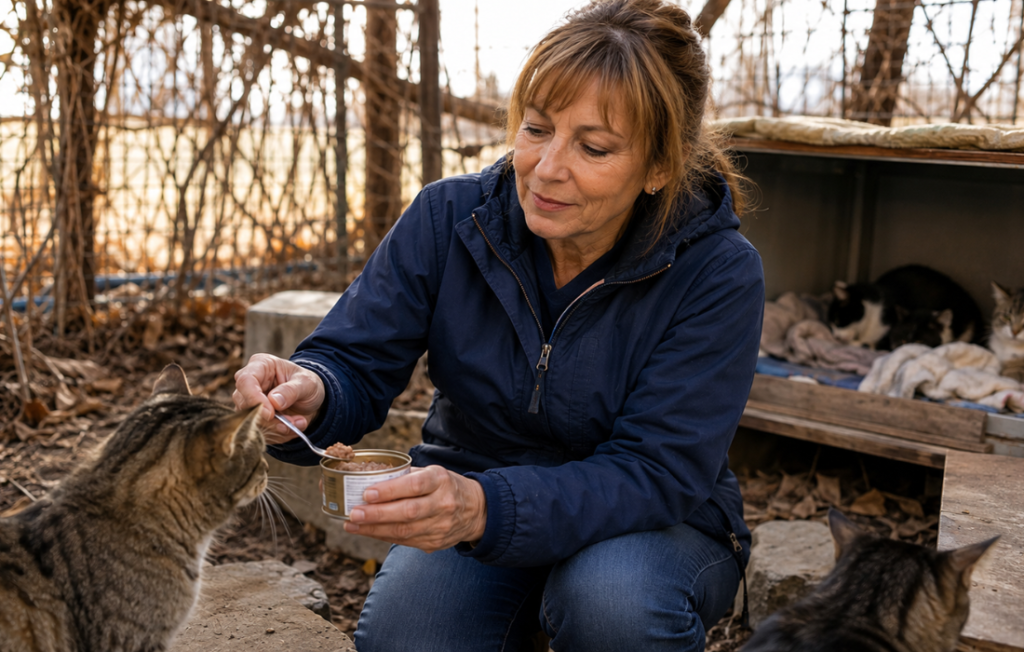
One of the most revealing pieces of first person evidence comes from Sicuranza’s account of a feral cat named Sobie. In the 2019 TEAM newsletter, she described feeding the cat near her farm and hoping to trap him for neutering. Before she could do that, Sobie was killed by a car.
Sicuranza connected that experience with the creation of the TEAM Incentive Program for feral cats. TEAM reported in the same publication that more than 320 feral cats had come through the program since it began in 2014. This is an organizational claim published by TEAM in 2019, rather than an independently audited impact figure.
The story matters because it gives readers something a résumé cannot provide: direct evidence of how an individual experience intersected with an organizational program. It also illustrates why a responsible biography can include personal testimony when the person themselves publicly supplied it, without drifting into speculation about unrelated private life.
Trap Neuter Return and Community Cats
TEAM has promoted Trap-Neuter-Return, commonly called TNR, as part of its approach to feral cats. In its 2019 newsletter, the organization described TNR as involving humane trapping, sterilization and return to the cat’s established location. The TEAM Incentive Program was designed to support qualifying feral cat caretakers using that approach.
The practical significance is that prevention can occur outside the traditional shelter system. A feral cat does not necessarily become an adoption candidate simply because it has entered a veterinary program. TEAM’s materials distinguish cats being returned to their colony from cats or kittens being socialized for adoption, showing that the organization recognizes different pathways within feline welfare.
That focus helps explain why Sicuranza’s professional story is better framed around preventive animal welfare than rescue alone. The objective is not simply to respond after an animal enters a shelter. It is also to make sterilization and basic veterinary services available before reproduction creates additional challenges.
Donna Sicuranza’s Role in Connecticut’s Animal-Welfare Community
Sicuranza’s public work has also appeared in Connecticut’s broader animal-population policy environment. Minutes from an August 15, 2019 Connecticut Department of Agriculture Animal Population Control Program Working Group meeting list Donna Sicuranza of Tait’s Every Animal Matters among the attendees.
The meeting included state officials, veterinarians, animal-control professionals and representatives of animal rescue organizations. The agenda covered issues including veterinary reimbursement, animal licensing, veterinary care costs and the future of the state program. Sicuranza’s attendance therefore places TEAM within a wider professional conversation about animal population control.
It would be an overstatement, however, to describe attendance at the meeting as evidence that Sicuranza held government office or personally shaped Connecticut policy. The record supports a narrower conclusion: she participated in a professional working-group discussion as a representative of TEAM.
What TEAM’s Work Looks Like Today
TEAM remains relevant because its basic service model continues to address a practical access problem. Connecticut resources currently identify the TEAM Mobile Feline Unit as a low-cost spay/neuter and vaccination service for cats, with the organization based in Westbrook. State records have also listed the TEAM Mobile Feline Unit among participating veterinary practices.
Current service details can change, so readers should not treat older prices, locations or appointment arrangements as permanent. The supplied draft, for example, cites a current $245 package, while TEAM’s 2019 newsletter listed a $110 package. That difference is precisely why historical and current service information should be separated.
The enduring feature is the mobile model. Rather than requiring every cat caretaker to travel to one permanent clinic, TEAM takes scheduled feline services into communities. That approach does not eliminate every barrier to veterinary care, but transportation and geographic access are meaningful considerations when services are designed for statewide reach.
What Is and Is Not Publicly Confirmed About Donna Sicuranza
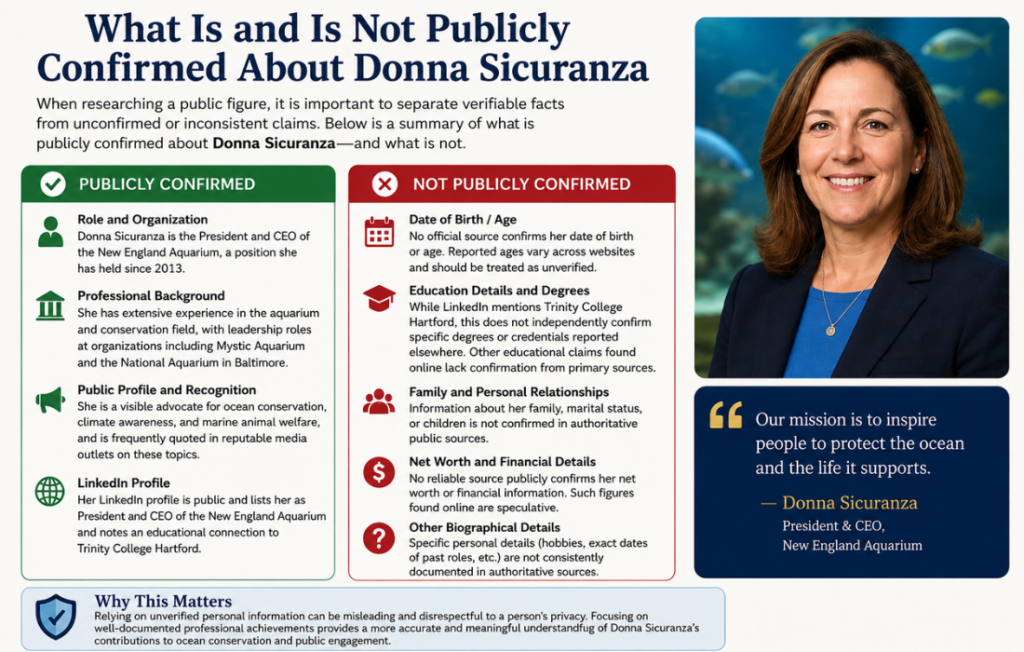
There is a temptation with biography searches to fill every blank. Age, date of birth, net worth, family relationships and educational credentials can make an article appear more complete, but completeness is not the same thing as reliability. For Donna Sicuranza, several such details are either inconsistently reported or insufficiently documented in primary sources.
The supplied research appropriately recommends caution around education information and private details. LinkedIn currently identifies Trinity College Hartford, but it does not independently establish every degree or credential that appears on third party biography sites.
The same standard should apply to personal relationships, financial information and precise biographical dates. Unless those details are confirmed through a reliable primary or authoritative source, they add more risk than value. A useful Donna Sicuranza profile does not need speculative personal information to explain her professional significance.
Why Donna Sicuranza’s Work Matters
The most persuasive theme in the public record is continuity. TEAM’s 2019 newsletter described a program reaching its 200,000th sterilization after more than two decades, while the supplied research documents a later organizational figure exceeding 225,000 cats. Those milestones show sustained operation rather than a short-lived nonprofit initiative.
Continuity is especially meaningful in preventive animal welfare because results are cumulative. Every clinic day depends on medical personnel, scheduling, equipment, funding, transportation, community hosts and caretakers bringing animals to the service. Sicuranza’s leadership should therefore be understood as part of an ecosystem rather than isolated from the people who make the clinic function.
That is ultimately the clearest way to understand Donna Sicuranza. Her public legacy is tied less to personal fame than to a long-running organization focused on practical access to feline veterinary care. The story is about building and sustaining a service, not manufacturing a celebrity biography around its executive director.
How to Research Donna Sicuranza Responsibly
Start With TEAM’s Own Records
For a current profile, the strongest starting point is Tait’s Every Animal Matters itself. Its publications provide direct evidence about Sicuranza’s title, communications work, the clinic’s history and the organization’s programs. TEAM’s 2019 newsletter is particularly useful because it combines organizational history with first person material from Sicuranza.
Cross Check Historical Claims
Historical claims should be compared against dated records rather than copied from one biography site to another. For example, the 2019 newsletter documents the 200,000th surgery and the clinic’s 1997 origin, while Connecticut government records independently establish Sicuranza’s participation in the 2019 Animal Population Control Program Working Group.
Separate Professional Facts From Private Information
The safest biography focuses on information directly connected to Sicuranza’s public professional work. Her executive role, communications responsibilities, TEAM history and public animal-welfare participation are relevant. Unverified claims about age, wealth, family or personal relationships are not necessary to satisfy the core search intent and should not be presented as fact.
Conclusion
Donna Sicuranza is best understood through the organization and mission that define her public professional record. Her connection with Tait’s Every Animal Matters reaches back to the creation of its mobile feline clinic in 1997 and includes executive leadership, communications work, feral cat advocacy and participation in Connecticut’s broader animal welfare community.
The strongest biography is therefore also the most restrained one. It documents what Sicuranza has publicly done, explains the significance of TEAM’s mobile care model, acknowledges the organization’s measurable milestones and avoids turning uncertain personal details into facts. That approach produces a more useful profile for readers and a more trustworthy piece of search content.
FAQs
Who is Donna Sicuranza?
Donna Sicuranza is a Connecticut nonprofit executive associated with Tait’s Every Animal Matters (TEAM). She served as the organization’s Executive Director.
Is Donna Sicuranza the same person as Donna Sicuranza Marconi?
Yes, available records strongly suggest they are the same professional. Older TEAM materials use “Donna Sicuranza,” while newer materials use “Donna Sicuranza Marconi.”
What is Donna Sicuranza known for?
She is mainly known for her long term work with TEAM and its mobile feline spay/neuter and vaccination clinic, which began in 1997.
What is Tait’s Every Animal Matters?
TEAM is a Connecticut animal welfare nonprofit that provides accessible spay/neuter and vaccination services, particularly for domestic and feral cats.
When did the TEAM mobile clinic begin?
TEAM’s mobile clinic began in 1997, established by Donna Sicuranza and veterinarian John Caltabiano. Its first day reportedly treated 12 cats.
How many cats has TEAM helped?
TEAM reported its 200,000th sterilization surgery in 2019 and now reports more than 225,000 cats sterilized and vaccinated since 1997.
Does Donna Sicuranza work as a veterinarian?
No. She is identified as an Executive Director, while TEAM’s veterinary staff includes veterinarians such as Arthur Heller, DVM.
What is TEAM’s role in TNR?
TEAM supports Trap Neuter Return (TNR) for feral cats and has provided incentives for cats that are sterilized and returned to their colonies.