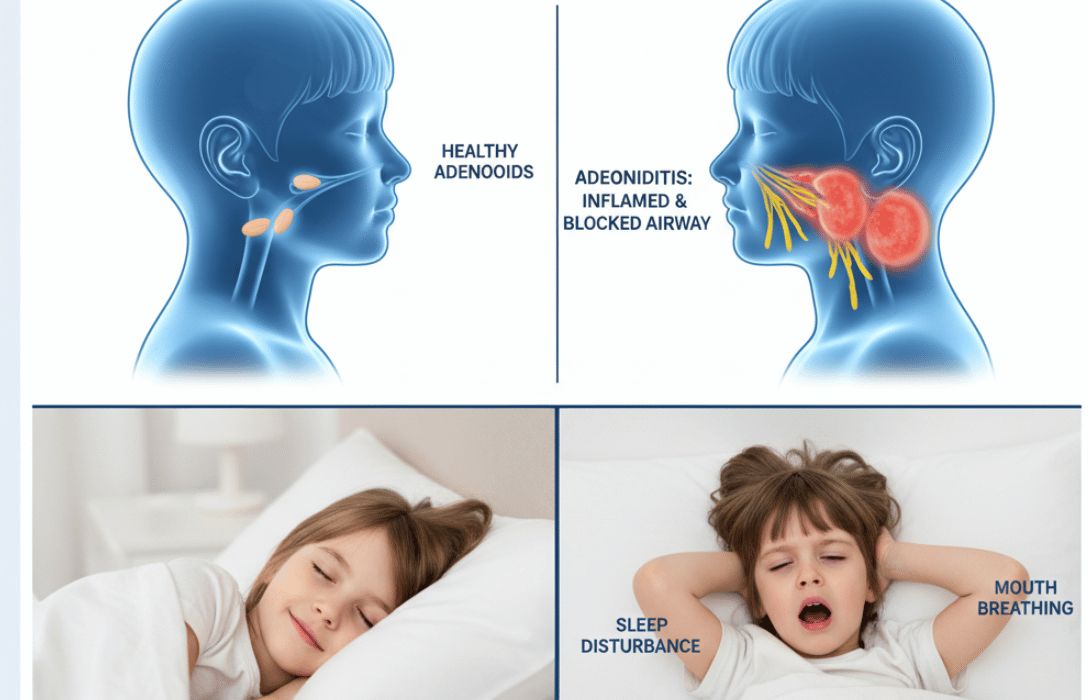
Adenoidid is a condition in which the adenoid glands become inflamed or infected. It mostly affects children and often appears like a long-lasting cold or repeated throat infection. Although it may seem simple at first, untreated adenoiditis can lead to breathing problems sleep disturbances and ear infections.
The adenoids are small lymphatic tissues located at the back of the nose in the upper throat. Their role is to protect the body from bacteria and viruses, especially during early childhood. However when they become infected they swell and create blockage in the nasal airway.
Because of this blockage, children may start breathing through their mouths and experience discomfort in sleep and daily activities.
What Are Adenoids and Their Role in Adenoidid?
Adenoids are part of the immune system and are most active during childhood. In the condition known as adenoidid these tissues become inflamed and lose their normal function.
Location of Adenoids
Adenoids are located behind the nasal cavity, in the upper back part of the throat. They sit in the nasopharynx region, which is the area where the nose connects to the throat. Because of this hidden position, problems related to adenoiditis are often not noticed early and are usually diagnosed only when symptoms become more severe.
Function of Adenoids
Under normal conditions, adenoids play an important role in protecting the body. They help trap harmful bacteria and viruses that enter through the nose and support the immune system, especially in children. Adenoids also assist in producing antibodies and help protect the respiratory system from infections.
However, in the condition known as Adenoidid this normally protective tissue becomes swollen and inflamed. Instead of helping the body, it starts causing breathing difficulties, nasal blockage, and repeated infections.
Causes of Adenoidid
Adenoidid develops when adenoids become infected or irritated due to multiple factors.
The most common cause of Adenoidid is viral infection. Common viruses include those responsible for colds and flu. These infections cause swelling and inflammation in adenoid tissues.
Bacterial Infections
After a viral infection, bacteria may grow in the inflamed area, making adenoiditis worse and longer lasting.
Allergies
Children exposed to dust, smoke, pollen, or polluted air may develop chronic adenoiditis due to continuous irritation.
Acid Reflux
In some cases, stomach acid moving up into the throat can irritate adenoids and contribute to adenoiditis symptoms.
Who is Most Affected by Adenoidid?

Adenoidid is most common in young children because their immune system is still developing.
Age Group
Children between 3 and 7 years are most affected. At this age, adenoids are naturally large, which makes swelling more noticeable.
Risk Factors
Adenoidid is more common in children who frequently get colds or throat infections. The risk also increases in children exposed to pollution or cigarette smoke. Those with allergies and children attending daycare or school are also more likely to develop this condition due to higher exposure to germs.
Symptoms of Adenoidid
Symptoms of adenoiditis often resemble a common cold but last longer or come back repeatedly.
Nasal Symptoms
Children with adenoiditis may have a blocked nose and difficulty breathing through the nose. They often develop a persistent runny nose and start breathing through the mouth instead. Postnasal drip can also occur, causing irritation in the throat.
Adenoiditis can disturb a child’s sleep and reduce sleep quality. Common signs include loud snoring, restless sleep, and frequent waking at night. In more severe cases, breathing pauses during sleep (sleep apnea) may also occur, which can affect overall health and energy levels.
In adenoiditis, swollen adenoids can block the ear tubes and lead to problems in the ears. Children may experience frequent ear infections, hearing difficulty, and a feeling of pressure or pain in the ears.
General Symptoms
Adenoiditis can also cause general body symptoms in children. These include fever, sore throat, fatigue, and irritability. These signs often make the child feel weak, uncomfortable, and less active throughout the day.
Irritability
Complications of Untreated Adenoidid
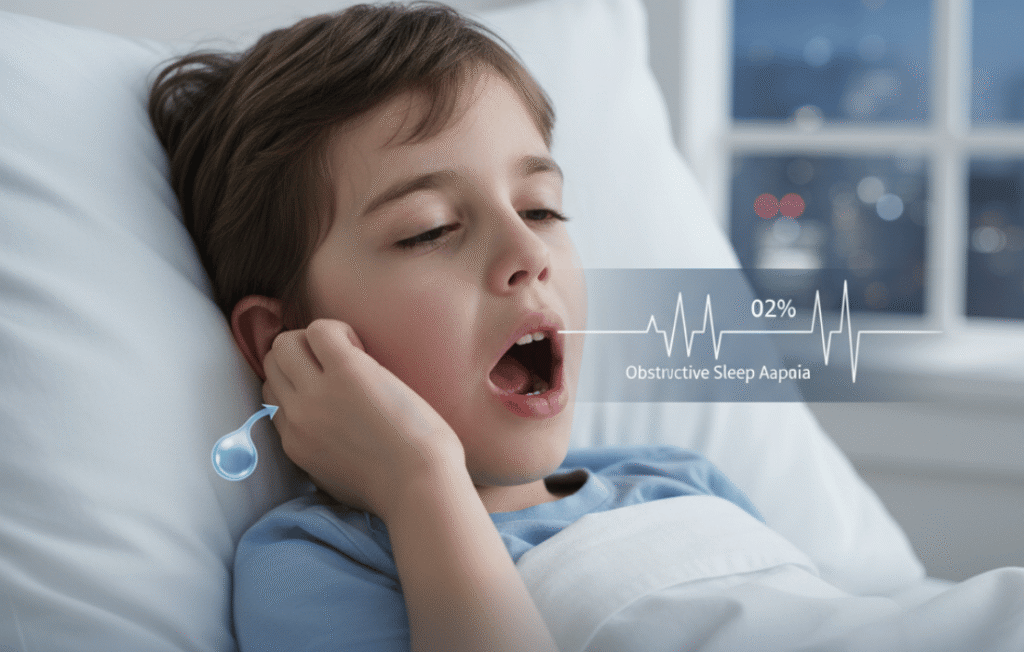
If Adenoidid is ignored or becomes chronic, it may lead to serious health issues.
Breathing Problems
Blocked nasal passages force children to breathe through their mouth, affecting normal breathing patterns.
Sleep Disorders
Adenoiditis may cause obstructive sleep apnea, which reduces oxygen levels during sleep and affects brain development.
Facial Development Changes
Long-term mouth breathing can lead to adenoid facies, including:
- Long face structure
- Narrow jaw
- Protruding teeth
- High-arched palate
Ear Infections and Hearing Loss
Blocked eustachian tubes can cause fluid to build up in the ears, leading to repeated ear infections. In some cases, this may also result in temporary hearing loss.
Diagnosis of Adenoidid
Doctors diagnose Adenoidid through a clinical evaluation of symptoms along with medical tests. They assess the child’s breathing, nasal blockage, and overall health condition to confirm the problem.
Physical Examination
The doctor checks symptoms such as nasal blockage, breathing difficulty, and throat inflammation.
Nasal Endoscopy
Nasal endoscopy is a medical test used to examine the inside of the nose and adenoids. In this procedure, a thin flexible tube with a small camera is gently inserted into the nasal passage. It allows the doctor to clearly see the size and condition of the adenoids and check for swelling or infection
Laboratory Tests
Laboratory tests help identify the cause of adenoiditis, especially if a bacterial infection is suspected. A throat swab may be taken to detect bacteria, and other tests can help confirm the type of infection and guide proper treatment.
Imaging Tests
Imaging tests, such as X-rays, are used to check the size of the adenoids and how much they are blocking the airway. These tests help doctors clearly understand the severity of adenoiditis and decide the best treatment plan.
Treatment of Adenoidid
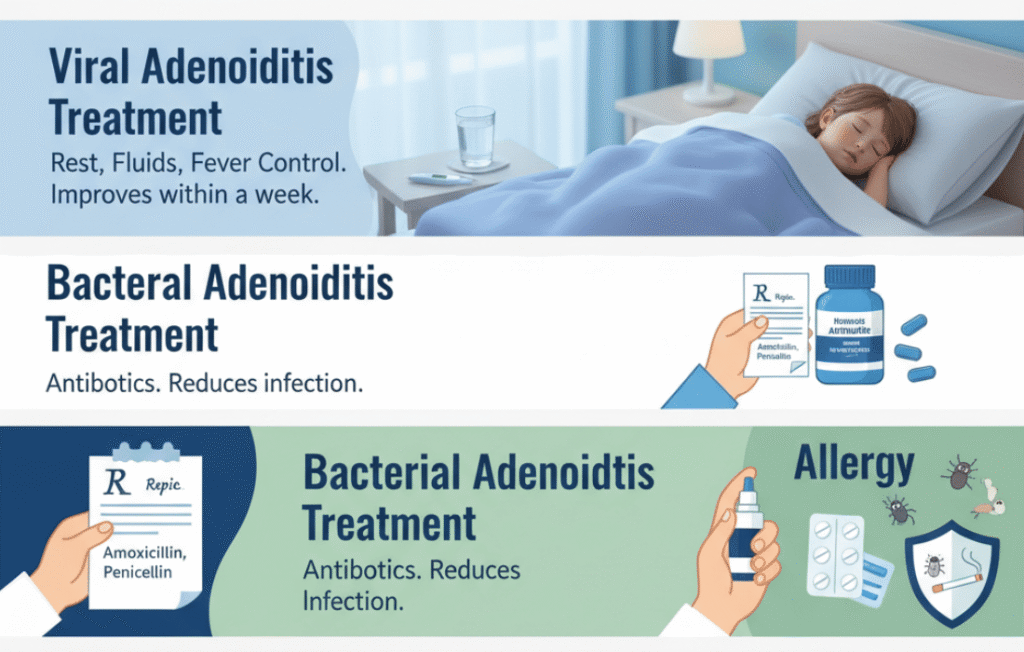
Treatment depends on the cause of the condition and severity of symptoms.
Most viral cases of Adenoidid improve on their own within about a week. Treatment mainly focuses on rest, drinking plenty of fluids, and controlling fever to help the child recover comfortably.
Bacterial Adenoidid Treatment
If adenoiditis is caused by bacteria, doctors usually prescribe antibiotics such as amoxicillin or penicillin. These medicines help reduce infection and improve symptoms within a few days.
Allergy Treatment
When allergies trigger adenoiditis, treatment includes antihistamines and nasal steroid sprays to reduce swelling. Avoiding allergens like dust, smoke, and pollen is also very important for recovery.
Acid Reflux Treatment
If acid reflux contributes to adenoiditis doctors may recommend acid-reducing medicines along with dietary and lifestyle changes. This helps reduce irritation and prevents the condition from getting worse.
Home Care for Adenoidid
Home care plays a major role in improving symptoms of adenoiditis. Children should be given plenty of fluids and proper rest. Steam inhalation can help clear nasal blockage and improve breathing.
Keeping the environment clean and free from dust or smoke also reduces irritation. Parents should ensure medications are taken properly if prescribed by a doctor.
Adenoidectomy for Chronic Adenoidid
In severe or recurring cases of adenoiditis, surgery may be needed. Adenoidectomy is a procedure in which the swollen adenoids are removed to improve breathing and reduce repeated infections. It is usually recommended when other treatments are not effective.
When Surgery is Recommended
Doctors recommend surgery for adenoiditis when the condition becomes frequent or long-lasting. It is also suggested when breathing is severely blocked, sleep apnea is present, or when ear infections keep recurring despite treatment.
Procedure Details
The surgery is performed under general anesthesia. The adenoids are removed through the mouth without any external cuts.
Recovery After Surgery
Recovery usually takes about 5 to 7 days. Most children experience immediate improvement in breathing, sleep quality, and overall health.
Can a Child Live Without Adenoids?
Yes, a child can live a completely normal life without adenoids. After removal, other parts of the immune system take over their function. In many cases, children experience fewer infections after surgery.
Prevention of Adenoidid
Although adenoiditis cannot always be prevented, some steps can reduce risk. Maintaining good hygiene, avoiding polluted environments, and managing allergies early are very important.
Parents should ensure children wash hands regularly and avoid exposure to smoke. A healthy diet and proper sleep also help strengthen immunity.
When to See a Doctor for Adenoidid
Medical advice should be taken if symptoms of adenoiditis last more than a week or if the child experiences severe snoring, breathing difficulty, repeated ear infections, or persistent fever. Early diagnosis prevents complications and ensures proper growth and development.
Conclusion
Adenoidid is a common childhood condition caused by infection or inflammation of the adenoid glands. While it may start as a simple cold-like illness, it can lead to breathing problems, sleep disturbances, ear infections, and facial changes if left untreated. With proper diagnosis and timely treatment, most cases of adenoiditis recover fully. In chronic cases, adenoidectomy is a safe and effective solution. Early awareness and treatment are the key to protecting a child’s health and ensuring normal development.
FAQs
What are adenoids?
Adenoids are small tissues located at the back of the nasal passage. They help fight infections in children by trapping germs that enter through the nose and mouth.
What is the age limit for adenoidectomy?
There is no strict age limit for adenoidectomy, but it is most commonly done in children aged 3 to 7 years. It can be performed at any age if symptoms are severe.
What causes enlarged adenoids?
Enlarged adenoids are commonly caused by repeated infections, allergies, or chronic inflammation in the upper respiratory tract.
What are the main symptoms of enlarged adenoids?
Common symptoms include mouth breathing, snoring, nasal blockage, bad breath, ear infections, and difficulty sleeping.
How are enlarged adenoids treated?
Treatment may include medicines like nasal sprays or antibiotics. In severe cases, doctors may recommend surgery called an adenoidectomy.
Is adenoidectomy a safe surgery?
Yes, adenoidectomy is generally a safe and common procedure in children with low risk of serious complications when done by an ENT specialist.
Can adenoids grow back after removal?
In most cases, adenoids do not grow back after removal. Rarely, small regrowth may occur, but it usually does not cause symptoms.