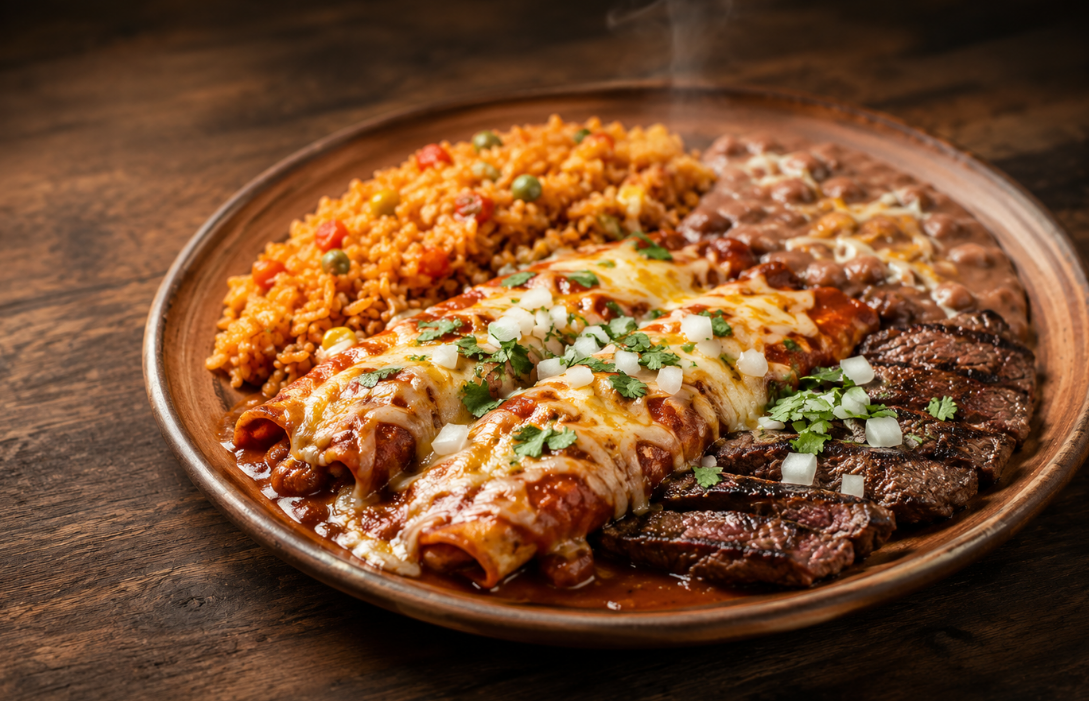
If you searched for ranchiladas expecting one universally recognized dish, you may have found something confusing. Some recipes use the name for chicken enchiladas flavored with ranch dressing or ranch seasoning, while restaurant menus can use ranchiladas for grilled steak served with cheese enchiladas and a chile based sauce.
That difference matters because there is no single standardized recipe hiding behind the word. The safest way to understand ranchiladas is as an informal name applied to dishes that bring ranch style flavor or a ranch themed combination into the familiar enchilada format.
What Are Ranchiladas?
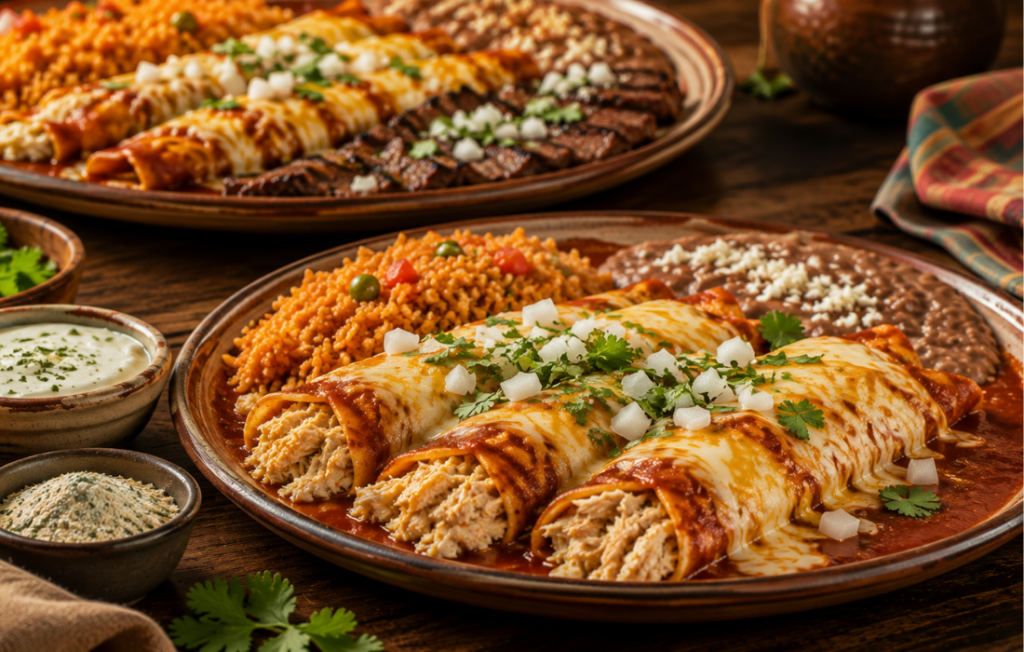
The most common recipe interpretation is essentially a ranch-flavored enchilada. Chicken, cheese, tortillas, enchilada sauce and ranch dressing or seasoning are combined into a baked dish, often with green chiles or other ingredients that add heat and contrast.
A published Chicken Ranchiladas recipe, for example, combines cooked chicken with spinach, pepper Jack cheese, ranch seasoned Greek yogurt and enchilada sauce. Another recipe uses chicken, sour cream, green chiles, pepper Jack cheese, ranch seasoning and corn tortillas.
There is a second meaning that is easy to miss. On The Border’s menu has used “Ranchiladas” for a plate centered on mesquite-grilled steak, roasted red chile-tomatillo salsa and two hand-rolled cheese enchiladas covered with chile con carne.
So, if someone asks what ranchiladas are, the most accurate answer is that the term is context-dependent. In a home-recipe search, expect ranch seasoned enchiladas; in some restaurant contexts, expect a steak and enchilada combination.
Why Are They Called Ranchiladas?
The name appears to be an informal blend of “ranch” and “enchilada.” That interpretation fits the recipe evidence, where ranch dressing or ranch seasoning is incorporated directly into the filling or sauce, although the sources reviewed here do not establish a definitive historical origin for the word itself.
That loose naming explains why recipes can look surprisingly different. A food name built around a flavor idea rather than a tightly codified culinary standard can travel between home kitchens, recipe contests and restaurant menus without retaining exactly the same ingredient list.
It is therefore better not to assume that every dish called ranchiladas contains bottled ranch dressing. Some versions use ranch seasoning, some use prepared dressing, and others use the name for a restaurant entrée whose “ranch” identity comes from its broader combination of steak, sauce and enchiladas.
What Do Ranchiladas Taste Like?
A ranch-seasoned version usually sits between creamy, tangy, savory, cheesy, and mildly spicy. Ranch contributes the familiar combination of herbs, garlic or onion notes, acidity, and creamy richness, while enchilada sauce supplies chile flavor and the deeper savory character associated with baked enchiladas.
The key is balance. Ranch seasoning can be concentrated and salty, so using a large amount can overwhelm the chicken, cheese, and chile sauce rather quickly. A better result treats ranch as a supporting flavor rather than allowing it to become the only thing you taste.
Ranchero sauce deserves special attention because it is not simply another name for ranch dressing. “Ranchero” describes a chile-based sauce style, whereas ranch dressing is the creamy American dressing associated with the ranch flavor profile. The similarity in the words can make these two very different ingredients sound more interchangeable than they are.
What Goes Into Good Ranchiladas?
Tortillas form the structural foundation, and the choice between corn and flour changes the finished texture. A published ranchilada recipe uses corn tortillas, while another uses eight inch flour tortillas, demonstrating that both approaches appear in existing recipes.
For a creamy chicken version, shredded cooked chicken is particularly practical because it distributes evenly through the filling. Green chiles can add a gentle chile character, while onion contributes sweetness and texture. Cheese then binds everything together as it melts, making pepper Jack, Monterey Jack or a Mexican style blend logical choices.
The sauce should moisten the tortillas without turning the casserole watery. A red enchilada sauce works particularly well with the tangy ranch element because the chile flavor gives the creamy filling something sharper to balance against.
How to Make Ranchiladas at Home
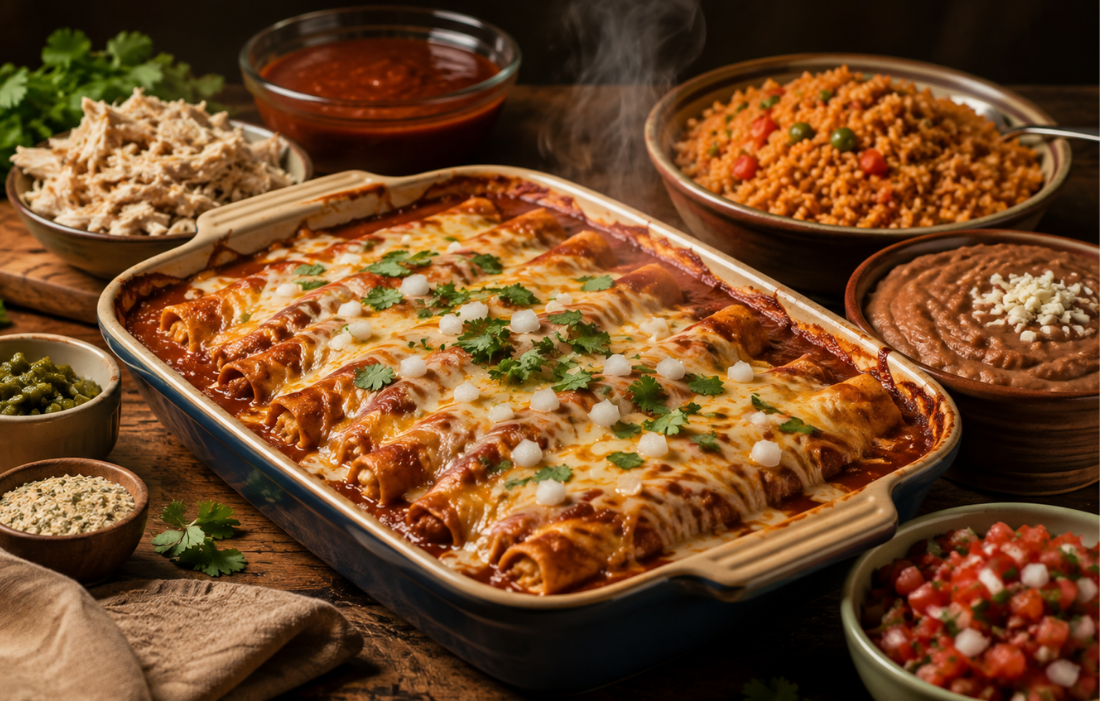
Prepare the Filling
Start with cooked, shredded chicken and combine it with your chosen ranch component. For a richer filling, sour cream or Greek yogurt can provide creaminess, while green chiles bring a little heat. Add shredded cheese gradually rather than dumping in a large quantity at once, so the filling remains cohesive rather than greasy.
The goal is a filling that is moist but spoonable. If it looks runny before it goes into the tortillas, the finished dish is likely to become loose after baking. If it looks extremely dry, however, the tortillas may absorb too much sauce and lose their soft, cohesive texture.
Build the Sauce
Use a prepared enchilada sauce when convenience matters, or make a chile-based sauce if you want more control over heat and seasoning. Ranch seasoning can be stirred into the sauce in some versions, but this is where restraint becomes especially important because the filling may already contain ranch flavor.
Taste the components separately before assembling. You are looking for contrast rather than uniform intensity: the sauce should taste savory and chile forward, the filling should be creamy and seasoned and the cheese should provide richness without making the whole dish taste excessively salty.
Roll and Assemble
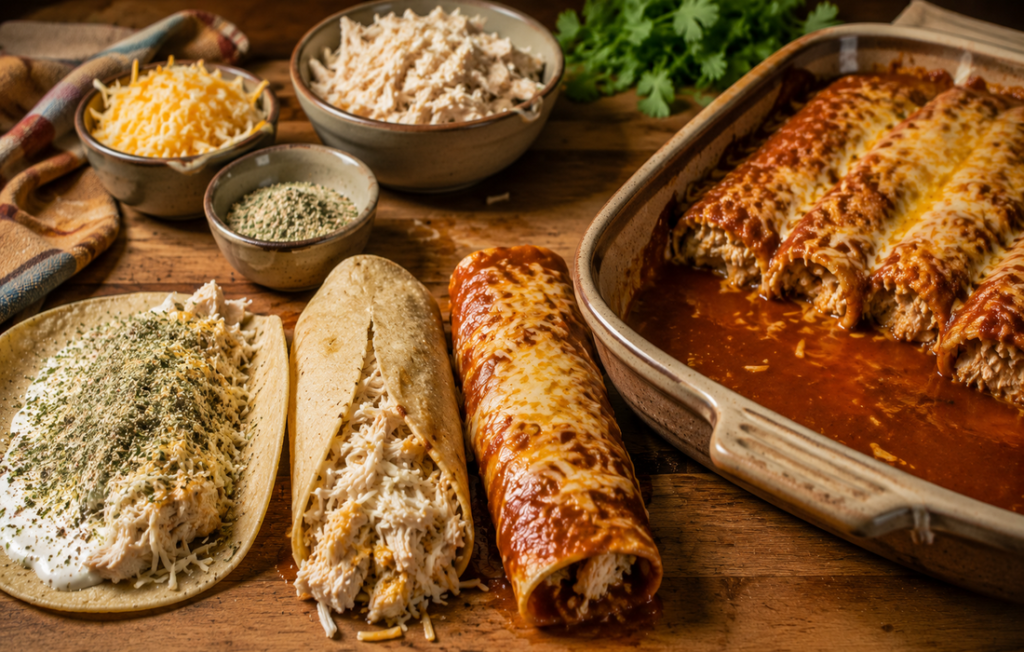
Warm the tortillas enough to make them flexible, then place a manageable amount of filling along the center. Roll each tortilla firmly without compressing it excessively and position the seam underneath in the baking dish so the rolls remain closed while they heat.
Spread sauce across the bottom of the dish before adding the rolled tortillas. Once they are arranged, cover them generously with additional sauce and finish with cheese. Existing recipes use this general assembly method, although exact tortilla type, sauce quantity and baking temperature vary.
Bake Until Bubbling
Bake the assembled dish until the filling is hot and the cheese has melted thoroughly. Published recipes range from approximately 20 minutes at 350°F to roughly 30 35 minutes at 350°F or 375°F, depending on the particular preparation.
That variation is useful rather than contradictory. A cold, densely packed casserole needs longer to heat than a smaller dish assembled with warm ingredients. Instead of treating one baking time as universal, judge doneness by the actual condition of the food: hot filling, softened tortillas, bubbling sauce and fully melted cheese.
Finish and Serve
Let the dish rest briefly before serving so the sauce can settle and the filling can firm slightly. This makes the enchiladas easier to lift without losing all of their structure, particularly when the filling contains sour cream, yogurt or a generous amount of melted cheese.
For a complete meal, ranch style chicken enchiladas can sit comfortably beside rice, beans, salsa, pico de gallo or a simple salad. Restaurant-style ranchiladas are already commonly paired with Mexican rice and beans, although the exact accompaniments depend on the restaurant and version.
How Ranchiladas Compare With Other Enchiladas
Traditional enchiladas are a broad category rather than one single recipe. Tortillas are filled, rolled, and served with a sauce, but fillings, cheeses, sauces and cooking methods vary considerably across regional and restaurant interpretations.
Ranchiladas distinguish themselves through the ranch component or the particular restaurant style combination represented by the name. That makes them less useful as a strict category and more useful as a descriptive label for a particular flavor profile or menu construction.
They are also different from enchiladas suizas, which are commonly associated with a creamy sauce and melted cheese. A restaurant menu, for example, describes its enchiladas suizas with chicken tinga, tomatillo cream sauce and melted Jack cheese, while its ranchiladas use steak, chile tomatillo salsa, cheese enchiladas and chile con carne.
Common Ranchiladas Mistakes
The biggest mistake is treating ranch seasoning like an ordinary dried herb blend and adding it freely. Because seasoning mixes can contain substantial salt and concentrated flavor, adding ranch to both the filling and sauce can quickly make the finished casserole taste one dimensional.
Another problem is overfilling the tortillas. More filling does not necessarily produce better enchiladas; it can make rolling difficult and cause the tortillas to split or open during baking. A moderate layer gives the tortilla enough room to close while still providing a satisfying filling to sauce ratio.
Finally, don’t overlook moisture. The tortillas need sauce to soften during baking, but the filling should not be wet enough to flood the dish. Good ranchiladas should feel saucy and tender rather than watery, with enough structure that each portion can be transferred from the baking dish intact.
Conclusion
Ranchiladas are best understood as a flexible, informal name rather than a single standardized recipe. In home cooking, the word commonly points toward ranch seasoned enchiladas, especially creamy chicken versions, while restaurant menus can use it for a more elaborate steak and enchilada plate.
That ambiguity is actually useful. It gives you room to build the dish around the flavors you want: tender chicken or grilled steak, melted Jack cheese, chili based sauce, flexible tortillas and just enough ranch character to make the dish distinctive without overwhelming everything else.
The most successful version is therefore not necessarily the one with the most ranch. It is the one where ranch, chile, cheese, tortilla and filling each have a recognizable role. Once that balance is understood, ranchiladas become much easier to adapt and much harder to make bland or excessively heavy.
FAQs
Are Ranchiladas Actually Mexican?
Ranchiladas are not considered a traditional Mexican dish. The term is commonly used for ranch seasoned enchiladas or other Mexican inspired variations.
Are Ranchiladas the Same as Enchiladas?
Not exactly. Enchiladas are a traditional Mexican dish, while ranchiladas are an informal variation featuring ranch style flavors or other unique combinations.
Can You Make Ranchiladas With Chicken?
Yes, chicken ranchiladas are a popular and easy option. Shredded chicken pairs well with ranch seasoning, cheese, green chiles and creamy sauces.
Can You Use Corn Tortillas?
Yes, corn tortillas work great for ranchiladas and add a more traditional enchilada style flavor. Flour tortillas can also be used for a softer texture.
What Cheese Works Best?
Monterey Jack and Pepper Jack are excellent choices for ranchiladas because they melt well and complement the creamy ranch and chile flavors.
Can You Make Them Without Ranch Dressing?
Yes, ranchiladas can be made without ranch dressing. Ranch seasoning, sour cream or ranch flavored yogurt can provide a similar savory flavor.
What Sauce Goes With Ranchiladas?
Red enchilada sauce pairs especially well with chicken ranchiladas. You can also use roasted chile-tomatillo salsa for a bolder Mexican-inspired flavor.
Can Ranchiladas Be Made Ahead?
Yes, ranchiladas can be assembled ahead and refrigerated before baking. For the best texture, avoid soaking the tortillas in sauce for too long.