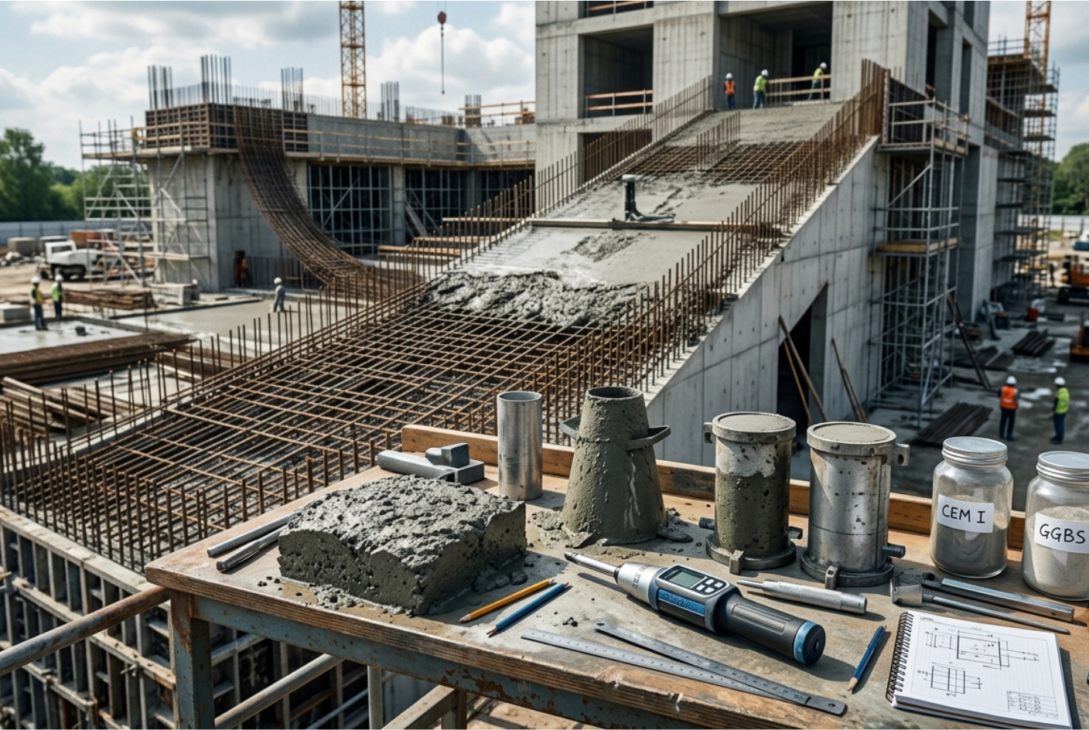
Concrete specs are full of confusing letter codes, and few are more puzzling than CIIIB. Yet behind that odd string sits one of the most useful, eco-friendly cements in modern buildings. This guide explains what ciiib is, why engineers love it in tough conditions, and where it quietly lasts for a century.
What CIIIB Really Is and Where It Sits in the Cement Family
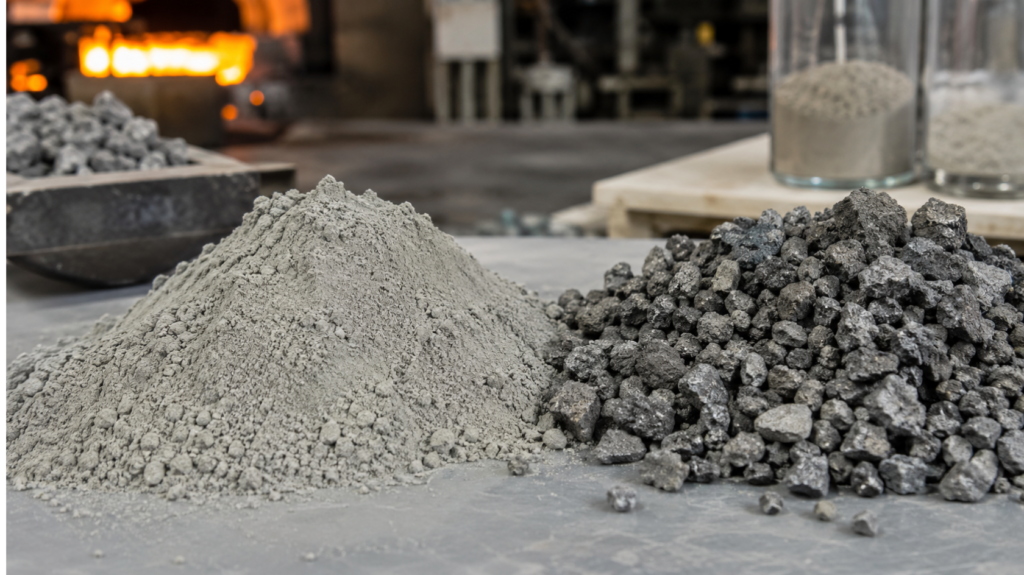
CIIIB is a label from the British standard BS 8500 for a cement blend made mostly from ground granulated blast-furnace slag, known as GGBS. In European terms it matches CEM III/B, a blast-furnace cement where slag makes up 66 to 80 percent of the mix.
The rest is mostly ordinary Portland cement clinker. That split matters because clinker is the carbon heavy part of cement, made by heating limestone in a kiln. Slag is a leftover from making iron, so swapping the clinker for slag changes the heat, strength and carbon of the concrete.
The BS 8500 Labels Explained
BS 8500-2 sorts slag cements into a simple ladder. CIIS sits at the bottom with six to 35 percent slag, CIIIA covers 36 to 65 percent, and CIIIB tops the list at 66 to 80 percent. Each step up means more slag, less clinker, and a different set of properties.
This is not just a label for show. A CIIIA mix and a CIIIB mix can behave so differently that picking the wrong one on a marine pour is a real risk. The label tells the supplier what blend to make and tells the engineer what to expect from the concrete.
How CIIIB Compares With Ordinary Cement
Ordinary Portland cement, or CEM I, has almost no slag, under five percent. It sets fast, gives off a lot of heat and resists chemicals only moderately. CEM III/A sits in the middle. CIIIB sits at the far end, acting less like normal cement and more like a slow, tough binder for harsh places.
5 Reasons CIIIB Wins for Tough Concrete
Ciiib earns its place on a spec sheet for five clear reasons, each grounded in how slag changes the binder. Together they explain why engineers keep reaching for it when ordinary Portland cement would fall short, and why it now turns up on some of the biggest, longest-life pours around.
Chemical resistance
Ciiib fights off the sulfates and chlorides that crack and rust ordinary concrete, making it a natural pick for marine and sulfate-heavy ground.
Low heat
Because slag reacts slowly, ciiib gives off far less heat than Portland cement, which protects big pours from thermal cracking.
Long-term strength
While ciiib starts slower, it keeps gaining strength and often matches or beats Portland mixes by 28 or 56 days.
Carbon savings
Replacing most of the clinker with slag cuts embodied carbon by roughly half, helping projects meet green targets.
Service life
The same dense pore structure that resists chemicals also adds decades to a structure’s working life, lowering repairs and whole-life cost.
Why CIIIB Excels in Tough Conditions
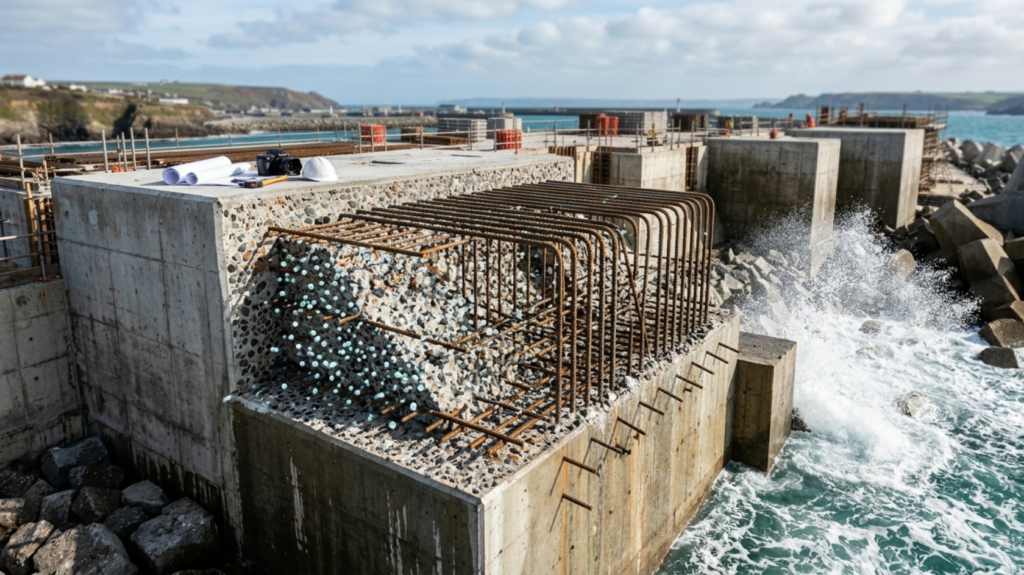
Engineers keep choosing CIIIB because it lasts where other concrete fails. In seawater, sulfate-heavy soils and factories, ordinary concrete breaks down as harmful chemicals soak in and react with the cement paste. CIIIB changes both the chemistry and the pore structure to fight that damage.
Slag makes the cement paste denser, with fewer tiny channels linking up. That alone slows the entry of chlorides and sulfates. The chemistry is also less prone to the reactions that cause swelling, cracking and rusting steel, which is why ciiib is a go-to choice for long-life structures.
Sulfate and Chloride Resistance
Sulfate attack happens when sulfate ions soak into concrete and form a mineral called ettringite, which swells and cracks the paste from inside. CIIIB resists this well because it has less clinker, meaning less of the vulnerable chemistry and its dense pores slow the ions down.
Chloride resistance matters just as much, especially where steel rebar is at risk. Chlorides travel through concrete and break the protective layer around the steel, causing rust. The dense pore structure of CIIIB slows this travel a lot compared with plain Portland mixes, delaying the rust and adding years of life.
Low Heat for Big Concrete Pours
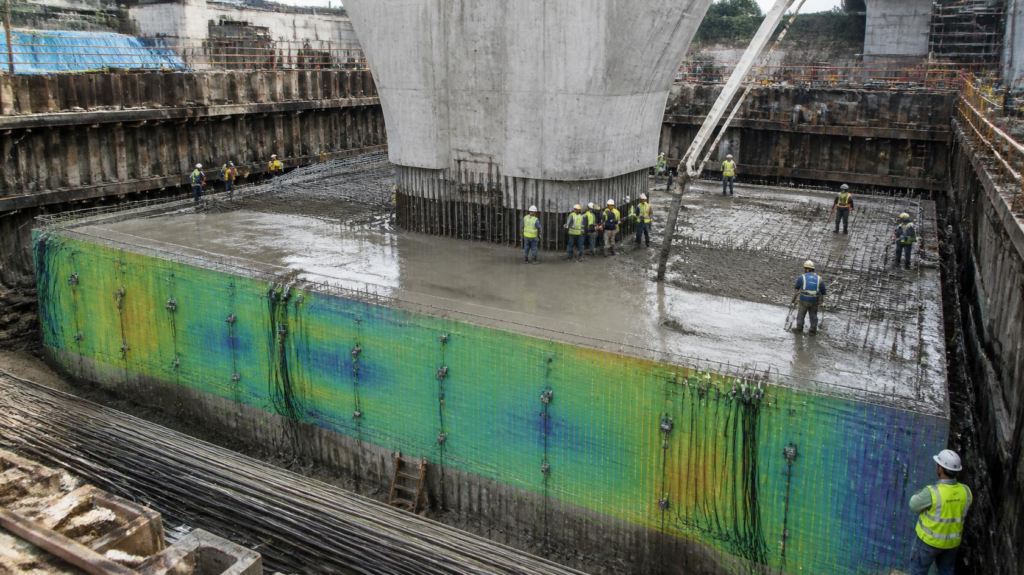
Making cement sets off heat, and in very large pours that heat gets trapped. The inside heats up and expands while the surface cools and shrinks, and cracks appear. CIIIB gives off far less heat than CEM I because slag reacts slowly and there is less clinker to burn hot and fast.
This low heat is why CIIIB shows up in dam walls, thick bridge piers and big foundations. On those pours, keeping the temperature even is the difference between a solid block and one full of cracks that shorten its life. The cost is simply slower strength gain, which big pours can usually accept.
The Strength Trade-Off You Need to Know
Nothing about CIIIB is free, and the main catch is early strength. Because slag reacts slower than clinker, a CIIIB mix usually tests weaker than Portland at seven days. Builders on a tight schedule sometimes see this as a headache and push back on the spec.
The story changes by 28 days, and often again by 56. CIIIB keeps gaining strength as the slag keeps reacting, often matching or beating Portland mixes at later ages. For structures meant to last decades, that slow climb matters far more than the first week.
Early Strength Versus Long-Term Gain
On a typical CIIIB pour, the seven-day strength might trail a Portland mix by a clear margin, while 28 day results catch up and 56 day results can pass them. The reason is a second, slower reaction where slag mixes with the byproducts of clinker to build more binding gel over time.
This delayed curve affects the schedule. Removing formwork, pulling cables in post tensioned slabs and letting traffic on new concrete all depend on reaching set strength levels. Specifiers using ciiib must either aim for later test dates or add accelerators to recover early strength without losing the durability.
Long Life in Marine Structures
Predicting the life of reinforced concrete often comes down to how fast chlorides reach the steel. Because CIIIB slows that journey so well, it can add decades to the expected life of a structure in water or splash zones, which is why it appears so often in ports and coastal work.
Designers following service life guides like fib Bulletin 34 often use slag blends to reach 50 or 100 year targets. The same slow chloride travel that protects the steel also means fewer repairs and lower lifetime cost, which is the quiet money argument behind the technical one.
The Carbon Story Behind CIIIB
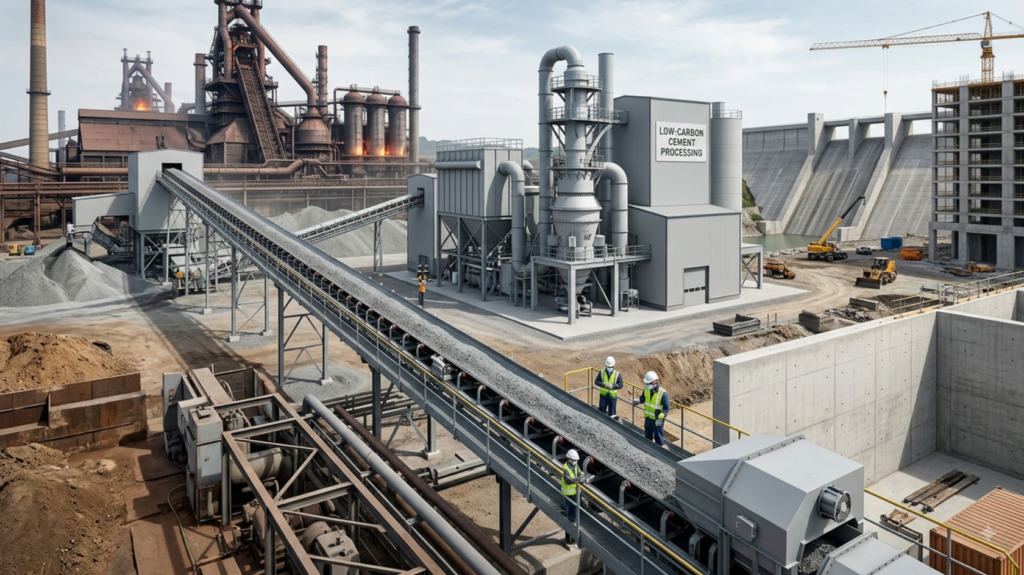
Clinker is the big carbon problem in concrete. Making one tonne of Portland cement clinker releases roughly that much carbon dioxide, because the limestone releases CO₂ in the kiln and fuel burns to reach the high heat needed. Replacing the clinker with slag skips most of that carbon.
GGBS is a leftover from making iron, so it only carries the carbon from grinding and shipping, not from making it from scratch. Using it turns a steel industry waste into a building material, which fits the recycling language that now fills many project sustainability reports and green building targets.
Carbon Savings in Practice
The carbon savings from CIIIB are large and easy to measure. Because slag replaces 66 to 80 percent of the clinker, a CIIIB mix can cut its embodied carbon by about half compared with a CEM I mix, depending on the blend, shipping distance and mix recipe.
Those savings count for projects chasing LEED or BREEAM credits and for clients with net zero goals. Verified environmental product declarations for CIIIB concrete now exist, giving designers real carbon figures to use in their calculations instead of rough guesses. The same logic behind these figures measuring how much recycled material actually ends up in a finished product applies whether you’re grinding slag into cement or recovering plastic for packaging.”
How to Specify and Work With CIIIB on Site
Specifying ciiib is more than writing the label on a drawing. Getting the promised performance depends on the mix design, curing, and supply all working together. The next sections walk through the practical choices that decide whether a CIIIB pour succeeds or falls short.
Picking the Right Mix and Slag Level
The first choice is where in the 66 to 80 percent slag range to land. The top end gives the best durability and carbon savings but the lowest early strength, while the lower end gains strength faster but gives up some sulfate resistance. Match the slag level to the exposure and the schedule.
Water needs and admixture response also shift with slag. It mixes often need tailored water reducing additives to stay workable and the slower set means the finishing window is longer. Run trial mixes with the supplier instead of assuming a Portland design will simply carry over.
Curing and Cold Weather
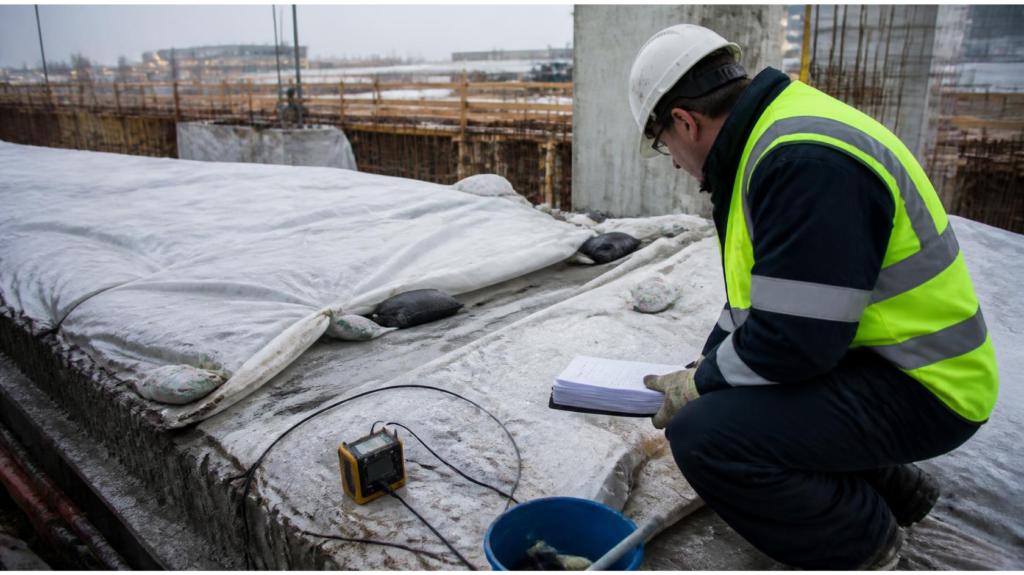
CIIIB does not forgive poor curing. Because slag reacts slowly and needs moisture, skimping on curing can stop the second reaction and leave the surface weak, dusty and cracked. Longer moist curing than for Portland concrete, often by a clear margin, is the single most important site habit.
Cold weather makes it harder. Below about ten degrees Celsius, the slag reaction slows a lot and early strength stalls. On winter pours, thermal blankets and warm aggregates help hold the temperature the binder needs, while accelerators can recover some early strength.
Working With the Supply Chain
Ciiib supply varies by region because it depends on GGBS, which comes from iron making that is changing as steel goes green. Confirm supply with your concrete supplier early, especially on big or staged jobs and think about backup cement options in case GGBS runs short.
Paperwork matters too. Ask for the cement conformity certificate and for carbon claims, the environmental product declaration. These records back up both compliance and any green building evidence the project needs at handover and they prove the blend really matches the CIIIB label you specified.
Real World Uses and Case Studies
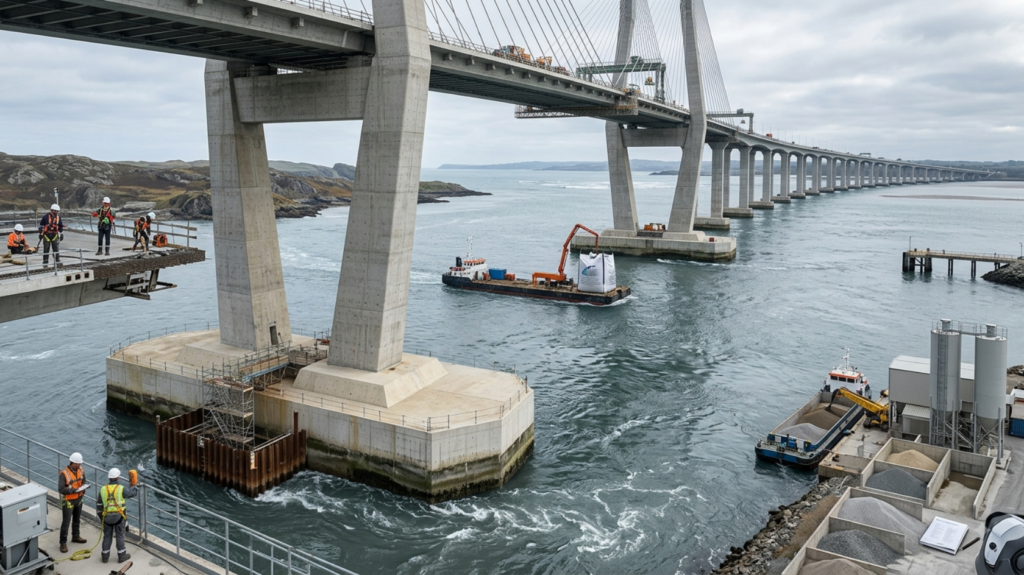
CIIIB appears in some of the toughest concrete around. The Mersey Gateway bridge used a C40/50 ciiib mix for its pylon pours, where low heat and high durability were both vital for the huge sections and the salty estuary. The 1200 cubic metre north pylon pour alone used 478 tonnes of cement.
In flood defence work, the Environment Agency has tried CIIIB as a low carbon swap for standard concrete. One reported trial made about 48 percent less greenhouse gas than the usual mix and saved roughly 26 tonnes of emissions framed as equal to tens of thousands of car miles. That kind of number moves it from niche to normal.
Big foundations, tunnel linings and marine structures are the natural home of this cement because they reward exactly what it offers: low heat, chloride resistance and long life. Precasters also use it when their schedule can accept the slower set, trading cycle time for better durability and lower carbon.
Common Pitfalls and When Not to Use CIIIB
CIIIB is not a cure all. On fast jobs where early strength drives the schedule, or on thin slabs that must carry traffic quickly, the slow set can cause more trouble than the durability fixes. In those cases a Portland or lower slag blend is often the honest choice.
Carbonation is the other watchpoint. Slag heavy pastes can be more open to carbonation than Portland pastes, which matters for reinforced parts in dry, sheltered spots where carbonation rust, not chloride, drives the failure. Pick the binder to fit the real threat, not a blanket green goal.
Finally, treat CIIIB as a specialist cement, not a straight swap. Curing, temperature control, additives and supply all need the same care as the mix design. When that care is given, It works beautifully; when it is not, the very traits that promise durability can deliver weak early results.
Conclusion
CIIIB is easy to ignore because its name looks like a typo, but it is one of the most capable cements a specifier can choose. By loading the mix with 66 to 80 percent slag, it gives up a little early strength for amazing durability, low heat and a much smaller carbon footprint. In the right setting, it is hard to beat. The case is simple: It resists the chloride and sulfate attacks that wreck ordinary concrete in marine and harsh settings and it does so while cutting embodied carbon by nearly half. For mass pours, coastal structures and anything built to last a century, that mix is genuinely powerful.
The care it asks for, good curing, watchful early strength, and steady GGBS supply, is the price of those benefits. Treat CIIIB as a specialist cement rather than a simple swap and it pays you back with concrete that lasts for generations and weighs less on the carbon ledger.
FAQ’s
What does CIIIB stand for?
CIIIB is a BS 8500 label for a high-slag cement blend with 66 to 80 percent ground granulated blast-furnace slag, matching the European CEM III/B blast-furnace cement.
Is CIIIB the same as GGBS?
Not quite. GGBS is the raw slag, a leftover from making iron. CIIIB is the cement label for a blend where GGBS makes up 66 to 80 percent of the total binder, mixed with Portland clinker.
How much carbon does CIIIB save?
Because slag replaces most of the clinker, the mix can cut embodied carbon by about half compared with a CEM I mix, though the exact number depends on the blend, shipping, and mix design.
Why is CIIIB used in marine construction?
Its dense pore structure slows the entry of chlorides and sulfates, protecting the steel and resisting chemical attack. That makes it a strong pick for ports, bridges, and coastal structures built to last.
Is CIIIB good for mass concrete?
Yes, it is one of the best choices. Its low heat of hydration cuts the risk of thermal cracking in thick pours like dam walls, bridge piers, and large foundations.
What are the downsides of CIIIB?
Slower early strength, more sensitivity to curing and cold weather, and possibly lower carbonation resistance in some settings are the main trade-offs compared with ordinary Portland cement.
Can CIIIB help with green building certification?
It can. The lower embodied carbon supports credits in schemes like LEED and BREEAM, and verified environmental product declarations back up the carbon savings for project assessments.
Is CIIIB supply reliable?
Supply depends on GGBS from the iron industry, which is shifting as steelmaking goes green. It is wise to confirm supply with concrete suppliers early, especially on large or phased jobs.
How should CIIIB be cured?
Ciiib needs longer moist curing than Portland concrete because slag reacts slowly and needs moisture. Poor curing can stop the second reaction and leave the surface weak and cracked.