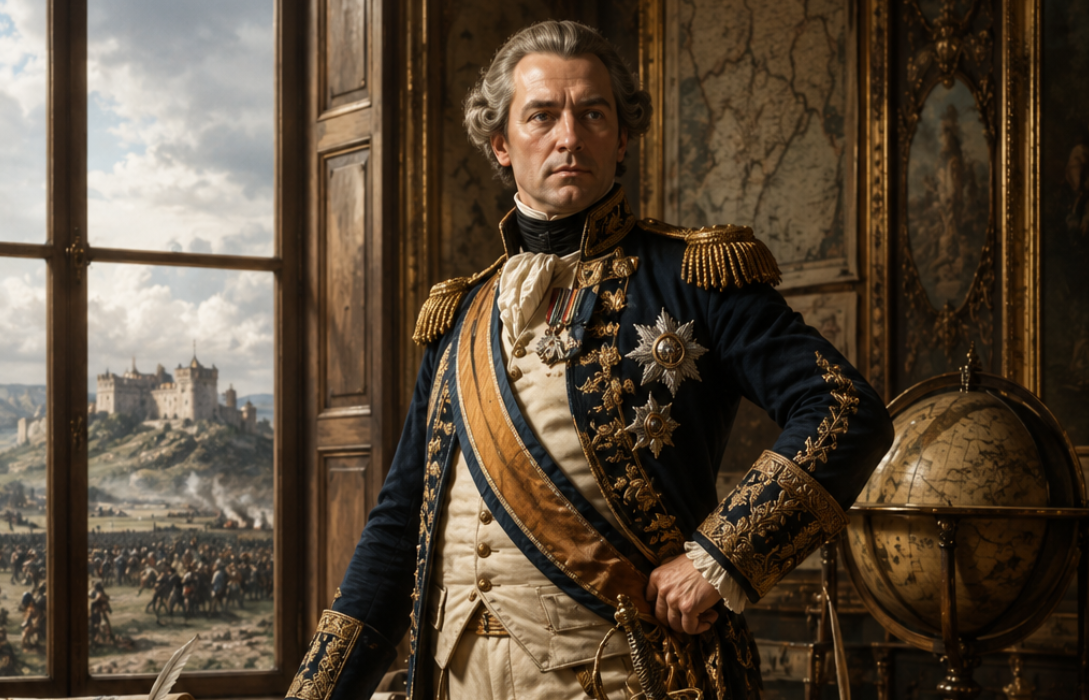
When you search for Bernhard Weißbach you quickly notice something unusual: the information is scattered, inconsistent and sometimes confusing. Some sources describe him as a Russian Empire general, others connect him to diplomacy in Vienna and a few even present him as a modern public figure.
In reality, he belongs to a much older historical world shaped by wars, empires and shifting European borders. Understanding his life helps you make sense of how military officers in the 17th and 18th centuries moved between armies, political systems and even countries.In this article, you’ll get a clear, natural explanation of who Bernhard Weißbach was, what he actually did and why his name still appears in historical searches today.
Competitor Analysis: How Existing Sources Cover Bernhard Weißbach
Before understanding the full story, it’s useful to see how current content platforms present him and where they fall short.
One of the most detailed narrative style sources comes from Nextera Magazine, which presents Bernhard Weißbach as a historical biography connected to the Russian Empire. Their approach focuses heavily on storytelling. They build a long chronological narrative starting from his early life, moving through military campaigns and ending with his role as Governor General of Kyiv. This style is engaging and helps readers emotionally connect with history, but it sometimes blends verified historical records with interpretive details, which can make it harder for readers to separate fact from narrative expansion.
On the other hand, reference based platforms such as Encyclopaedia Britannica take a completely different approach. Their content is structured, factual and minimal. They focus on verified historical points like dates, military ranks and key events. While this makes them highly reliable, they often lack deeper storytelling, background context and explanation of why figures likeBernhard Weißbachare historically important or why his name appears in multiple forms.
Most competing sources fall into one of these two categories: either highly narrative but less structured or highly structured but less engaging. What’s often missing is a balanced explanation that connects historical facts with simple context that modern readers can easily understand.
Who Was Bernhard Weißbach?
Bernhard Weißbachis most commonly identified with Johann Bernhard von Weissbach, a military officer who served the Russian Empire during the era of Peter the Great.
He was not a celebrity in the modern sense. Instead, he was part of a professional military class in early modern Europe where skilled officers moved between empires depending on opportunity and political demand.What makes him interesting is that he was not limited to one role. Over his lifetime, he worked as:
A cavalry officer on the battlefield
A military commander in major wars
A diplomatic representative in European courts
And later an administrative governor in a strategic imperial region
This combination of roles makes his biography more complex than many other military figures of his time.
Early Life and Central European Background

Bernhard Weißbachwas born in 1665 in Central Europe, although historical sources differ on whether his origin was Bohemia or Silesia. This kind of uncertainty is not unusual for the period as borders and identities were much more fluid than they are today.
At that time, a person’s identity was shaped less by nationality and more by language, religion and military service. Many officers moved across different European powers throughout their careers.
Weisbach came from a military oriented environment, which helped prepare him for later service in larger imperial armies. His early background likely gave him both the discipline and the experience needed to rise through military ranks in foreign service.
Entry into Russian Military Service
In 1707, Weisbach entered service in the Russian Empire during the Great Northern War, a major conflict between Russia and Sweden that reshaped Northern and Eastern Europe.
He began his Russian career as a colonel and was given command of a dragoon regiment. This was an important position because dragoon units combined mobility and firepower making them essential for fast moving battlefield operations.
At this time, Russia under Peter the Great was actively modernizing its army. Foreign officers like Weisbach were highly valued because they brought experience from other European military systems.His early actions in campaigns near places like Holowczyn and Smolyany helped him establish a reputation as a capable and reliable officer.
Military Role in Key Battles

As the war progressed, Bernhard Weißbach became more involved in active battlefield operations. He participated in several important engagements leading up to the Battle of Poltava in 1709.
His role was primarily connected to cavalry command, which required fast decision making and the ability to respond quickly during battle. Cavalry forces were essential for scouting enemy movements, flanking attacks and pursuing retreating forces.
During the Battle of Poltava, he was associated with commanding cavalry units on the Russian right wing. He was wounded during the battle but continued to support operations afterward, including the pursuit of retreating Swedish forces.This battle was a turning point in European history. Russia’s victory marked the decline of Swedish dominance and the rise of Russia as a major European power.
Diplomatic Mission to Vienna
After his battlefield success, Weissbach was assigned to a diplomatic mission in Vienna. This transition from military leadership to diplomacy was not unusual in the Russian Empire at the time.Vienna, ruled by the Habsburg court, was one of the most important diplomatic centers in Europe. Missions there required not just military knowledge but also political understanding and cultural awareness.
Weisbach’s assignment suggests that he was trusted not only as a military leader but also as someone capable of representing imperial interests in sensitive political environments. His Central European background may have also helped him navigate discussions within the Habsburg diplomatic system.
Governor General of Kyiv

One of the most important roles in his later life was his appointment as Governor General of Kyiv, a position he held from 1731 to 1735.Kyiv was a strategically important city within the Russian Empire, especially due to its location on the frontier. The role of governor general included military oversight, regional administration and coordination of defense systems.
During his tenure, Weissbach was also connected to the development of frontier defense structures designed to protect against raids and external threats. This included coordination along what was known as the southern defensive line. His appointment to this position shows the level of trust the empire placed in him after decades of service.
Name Variations and Historical Confusion
One of the main reasons Bernhard Weißbach appears in different forms today is due to translation and linguistic differences across historical records.
The table below explains the most common variations:
| Name Variant | Explanation |
| Weissbach | Original German spelling |
| Weissbach | English adaptation without “ß” |
| Weissbach | Simplified historical reference form |
| Veisbakh | Russian transliteration |
Because of these variations, modern readers often encounter fragmented or duplicate historical references, which creates confusion about whether these names refer to one person or several different individuals.
Legacy and Historical Importance
Bernhard Webbach’s historical importance lies in how his life reflects broader patterns in early modern European history.
He represents a time when:
Military officers often served multiple empires
Diplomacy and warfare were closely connected
Foreign expertise was essential for imperial expansion
Frontier regions required strong military governance
His career also highlights how Peter the Great relied on experienced foreign officers to modernize the Russian military and administration system.
Conclusion
Bernhard Weißbach, also known as Johann Bernhard von Weisbach was a military officer, diplomat and administrator who served during one of the most transformative periods in European history. His journey from cavalry command to diplomacy in Vienna and later governance in Kyiv reflects the flexible and interconnected nature of early modern imperial service.
While his name appears in different forms across sources, his historical identity remains tied to the major political and military developments of the 18th century. Understanding his life also helps you better understand how empires like Russia expanded and strengthened their power through experienced international officers.
FAQs
Who was Bernhard Weißbach?
He was a historical military officer linked to Johann Bernhard von Weisbach, who served the Russian Empire in the 18th century.
Was Bernhard Weißbach a real historical figure?
Yes, he is based on documented records of a military general and administrator in early modern Europe.
What was his main role?
He served as a cavalry general, diplomat and later Governor General of Kyiv.
Why is he connected to the Russian Empire?
He served under Peter the Great during the Great Northern War and rose through the Russian military system.
What is he known for?
He is known for his participation in the Battle of Poltava and his later administrative and diplomatic roles.
Did he serve in diplomacy?
Yes, he was sent on diplomatic missions, including important work in Vienna.
When did he govern Kyiv?
He served as Governor General of Kyiv from 1731 to 1735.
Why are there different spellings of his name?
Because his name was translated across German, English and Russian sources, resulting in variations like Weissbach, Weissbach and Veisbakh.