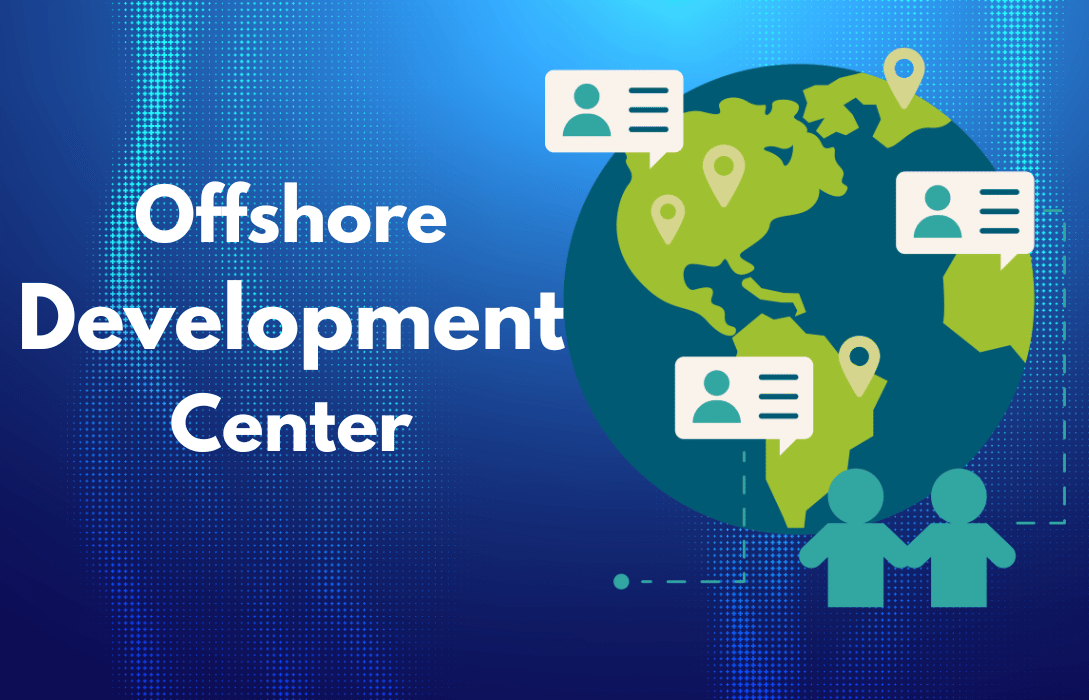
An Offshore Development Center (ODC) is a remote facility or dedicated team located in another country that manages software development, IT operations or technology projects for a company.
By leveraging global talent, cost efficiencies, and time zone advantages, ODCs enable businesses to scale operations, accelerate project delivery and access specialized expertise.
They serve as strategic extensions of in-house teams, ensuring high-quality results and operational continuity.
What Is an Offshore Development Center?
An offshore development center (ODC) is a dedicated team or facility located in a different country from a company’s headquarters, focused on handling software development, IT services or technology operations.
companies establish ODCs to leverage cost-effective talent, access specialized skills, and maintain continuous productivity across time zones.
How Offshore Development Centers Work
ODCs operate as extensions of a company’s in-house team but are situated in countries with favorable economic or talent conditions. The workflow typically involves:
- Team Setup: Companies hire developers, designers, QA specialists and project managers who work exclusively on the company’s projects.
- Communication Channels: Remote tools like Slack, Jira and Zoom facilitate collaboration with the headquarters.
- Process Integration: Development, testing, and deployment align with the company’s internal processes and quality standards.
- Reporting & Management: Regular updates and performance tracking ensure accountability and project transparency.
By integrating seamlessly with existing teams, ODCs maintain operational continuity without compromising on quality.
Why Businesses Choose Offshore Development Centers
Cost Efficiency
One of the primary drivers for ODC adoption is cost reduction. By hiring in countries with lower labor costs, businesses can maintain high-quality output while saving significantly on salaries, infrastructure, and operational overheads.
Access to Global Talent
ODCs allow companies to tap into specialized skills that may be scarce locally. For example, a U.S. company can hire highly experienced AI developers in India or Eastern Europe without relocation challenges.
Scalability and Flexibility
ODCs offer businesses the ability to scale teams up or down based on project needs, providing operational flexibility that in-house teams may lack.
Time Zone Advantages
Having teams in multiple time zones enables “follow-the-sun” workflows, which speeds up project timelines and ensures continuous productivity, especially for companies with global clients.
Common Types of Offshore Development Centers
Dedicated ODCs
A fully dedicated team focused solely on one company’s projects. Ideal for long-term development and strategic initiatives.
Smaller teams that may work on multiple clients but still maintain dedicated hours or resources for each project. Suitable for short-term or smaller scale projects.
Hybrid ODCs
Combines onshore and offshore teams for a blended approach, balancing control, communication, and cost efficiency.
Key Benefits of Offshore Development Centers
Reduced Operational Costs: Savings in salaries, office space, and utilities without compromising quality.
Access to Skilled Professionals: Companies can hire niche experts in emerging technologies.
Faster Time-to-Market: Parallel workflows across time zones shorten development cycles.
Enhanced Focus: In-house teams can concentrate on strategic decisions while ODCs handle routine development tasks.
Risk Diversification: Geographical distribution mitigates risks like natural disasters or local market fluctuations.
Challenges of Offshore Development Centers
While ODCs bring numerous benefits, companies may face:
- Communication Barriers: Cultural differences and language can cause misunderstandings.
- Time Zone Coordination: Overlapping hours may be limited, requiring careful planning.
- Quality Assurance: Maintaining consistent standards requires robust management and monitoring.
- Data Security: Companies must implement strict cybersecurity protocols to protect sensitive information.
Addressing these challenges proactively with clear policies, reliable tools, and structured workflows ensures long-term success.
How to Set Up an Offshore Development Center
Define Business Goals
Clarify the objectives of the ODC, such as cost reduction, specialized skill acquisition, or project scaling.
Choose the Right Location
Factors include talent availability, language proficiency, political stability, legal frameworks, and time zone alignment. Popular destinations include India, Ukraine, Poland, the Philippines, and Vietnam.
Hire and Onboard Talent
Recruit skilled professionals either directly or through local partners. Ensure a thorough onboarding process aligned with the company’s culture and development practices.
Implement Management Processes
Establish communication channels, task tracking, reporting structures, and quality control processes to ensure smooth operations.
Monitor Performance and Optimize
Continuously measure key performance indicators (KPIs), adjust workflows, and foster ongoing training to enhance productivity and maintain quality.
Practical Applications of Offshore Development Centers
- Software Development: Building enterprise applications, mobile apps, or web platforms.
- Quality Assurance: Dedicated QA teams ensure robust testing and bug tracking.
- Cloud Solutions: Developing, maintaining, and managing cloud-based systems.
- AI and Machine Learning: Specialized teams for predictive analytics, data modeling and automation.
- Digital Transformation Projects: Supporting legacy system modernization and tech innovation.
By aligning the ODC’s expertise with business goals, companies can achieve measurable performance improvements.
Measuring the Success of an Offshore Development Center
Key metrics to evaluate ODC performance include:
- Project Delivery Timelines: On-time completion of development milestones.
- Code Quality and Bug Rates: Monitoring defects, rework, and adherence to coding standards.
- Employee Productivity: Evaluating output relative to goals and KPIs.
- Cost Savings: Measuring reductions in operational and labor expenses.
- Client Satisfaction: Feedback from internal stakeholders or end-users on product quality and communication.
Regular analysis ensures that the ODC continues to add value to the organization.
Future Trends in Offshore Development Centers
- Increased Automation: Integrating AI-driven tools to improve productivity and reduce repetitive tasks.
- Nearshoring and Regional ODCs: Companies are exploring locations closer to headquarters to ease collaboration.
- Focus on Niche Expertise: ODCs will increasingly target emerging technologies like blockchain, IoT and cybersecurity.
- Remote-First Models: ODCs are adopting flexible, hybrid or fully remote structures to attract top talent worldwide.
These trends reflect a growing shift toward strategically leveraging global resources for sustainable growth.
FAQs
How do Offshore Development Centers maintain company culture remotely?
ODCs often adopt structured onboarding, regular virtual meetings and team building initiatives to align offshore teams with the parent company’s values, workflows and communication styles.
Can small businesses benefit from an Offshore Development Center?
Yes. Even startups or SMEs can leverage ODCs for specialized tech skills, flexible scaling and cost efficiency, without the need to maintain a large in-house team.
What technologies are commonly used to manage an ODC?
Tools like Jira, Trello, Slack, Microsoft Teams, GitHub and Zoom help with project tracking, collaboration, version control and remote communication for seamless ODC operations.
How do companies ensure data security in an Offshore Development Center?
Companies implement strict security protocols, including VPNs, encrypted communication, access controls and compliance with international standards like ISO 27001 or GDPR to protect sensitive information.
What is ODC in a call center?
An ODC in a call center is an offshore team handling customer support, telemarketing and back-office tasks, enabling 24/7 service, cost savings, skilled staffing and scalable operations across time zones.
What are the duties of ODC?
An ODC’s duties include software development, testing, maintenance, project management, R and D, documentation and collaborating with in-house teams to ensure high-quality, timely and efficient technology solutions.
What are examples of ODCs?
Examples of ODCs include TCS, Infosys, EPAM Systems, Globant, and Cognizant, where companies maintain dedicated offshore teams for software development, QA, cloud solutions and digital transformation projects globally.
Conclusion
An offshore development center is a strategic solution for businesses seeking cost-effective, skilled and scalable technology teams across the globe.
By understanding the structure, benefits, challenges, and best practices for managing ODCs, companies can enhance efficiency, maintain quality and accelerate innovation.
With careful planning, proper management, and continuous optimization, ODCs can become a pivotal part of a company’s long term growth strategy.